
Small Space Rug Size Calculator: Find Your Ideal Proportions
Finding the right carpet scale for a compact bedroom or small apartment living room can feel difficult. A carpet that is very small looks strange under the furniture, while a large carpet swallows the exposed floor and makes the narrow square footage feel narrower.
Use our interactive normal space rug-size calculator above to calculate your correct ratio immediately, or follow our visual placement guidelines below to balance your home setting.
Standard Bedroom Rug Sizing Guidelines
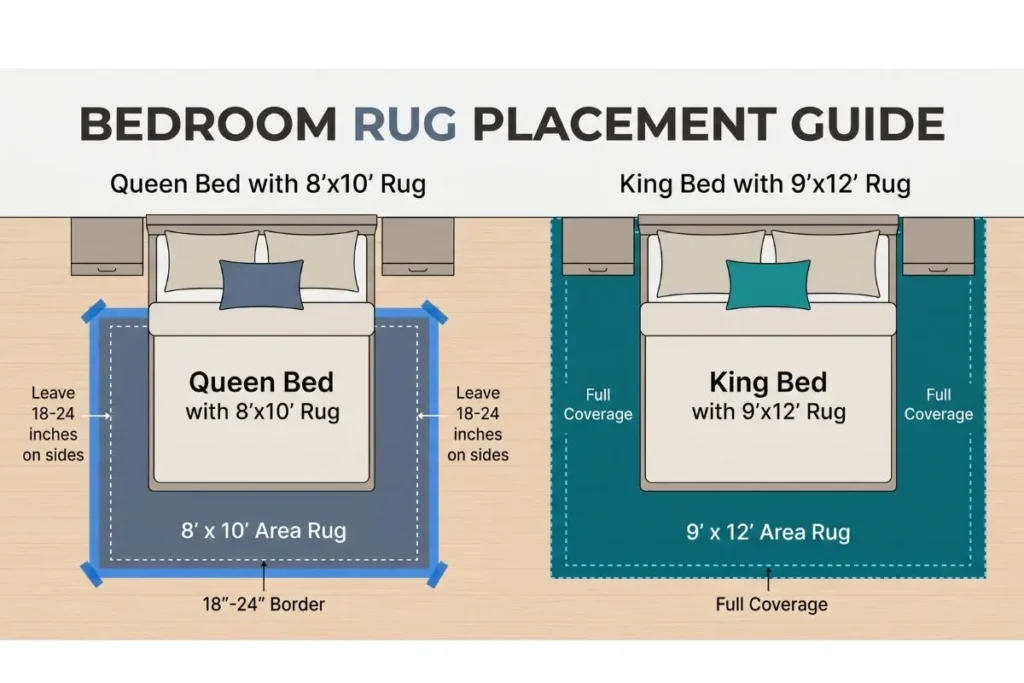
In Compact bedrooms, your bed frame dictates local balance. The standard rule of thumb is to place an 18- to 24-inch open soft carpet on both sides of the cardboard. When measuring space around your bed frame, refer to the official standard mattress size guide to calculate exact floor clearance.
| Bed Frame Size | Minimum Rug Size | Minimum Rug Size | Optimal Layout Strategy |
|---|---|---|---|
| King Bed | 8′ x 10′ | 9′ x 12′ | Extends 24″-36″ past the foot of the bed; covers the front feet on 9 ‘ x 12 ‘. |
| Queen Bed | 6′ x 9′ | 8′ x 10′ | Stops in front of nightstands; frames lower 2/3 of mattress cleanly. |
| Full / Double Bed | 5′ x 8′ | 6′ x 9′ | Frames the bottom half of bed; leaves 18″ exposed border in tight rooms. |
| Twin Bed | 4′ x 6′ | 5′ x 8′ | Place runner-style alongside bed frame or perpendicular under lower half. |
3 Practical Placement Strategies for Small Bedrooms
1. The Lower Two-Thirds Layout (Most Popular)
Draw your carpet down so that it starts at the front of your nightstand. It leaves your nightstand on the exposed floor while providing soft carpet where your feet descend every morning.
2. All Furniture On (Full Room Coverage)
If your room setting allows, choose 8’ x 10’ or 9’ x 12’ carpet so that all four bed legs and both nightstand carpet surfaces are covered. This room sticks anchor in a continuous visual zone.
3. Asymmetrical Runner Placement (Budget-Friendly)
In tight bedrooms or studio apartments where a large area in the carpet prevents the swings of the door of the closet closet, instead of putting 2’ x 6’ or 3’ x 5’ runner carpet on the main path of the bedroom.
Coordinating Rug Colors with Flooring Tones
Creating visual depth in small rooms depends very much on the color contradiction between the color of your floor and the color of the carpet; make such changes that make your room look bigger.
- Deep Hardwood Tones: Connect the deep oak or walnut floor to neutral light with light skin, soft cream, or flat walnuts of elephant tooth.
- Light tile or yellow pieces: Anchor the surfaces of light with rich tones (sage green, muted terracotta, slate blue) to create grounding points.
- Low Contrast Pattern: In less than 120 square feet, stick to visual, low-contrast patterns or solid woven textures to keep visual lines in disguise.
Frequently Asked Questions
What size rug goes under a queen bed in a small room?
An 8’ x 10’ carpet is an ideal size for a queen bed. For tight rooms, a 6’ x 9’ carpet is placed under two-thirds of the bed, which provides enough coverage without great walkways.
Should an area rug go under nightstands in a compact room?
In small rooms, keep the nightstand away from the carpet. Place the 8’ x 10’ carpet so the front of the nightstands is the part of the carpet surface where you walk, while avoiding uneven furniture legs.
How much exposed floor should show around an area rug?
The purpose of leaving 12 to 18 inches of bare floor between the carpet edge and the walls of the room.