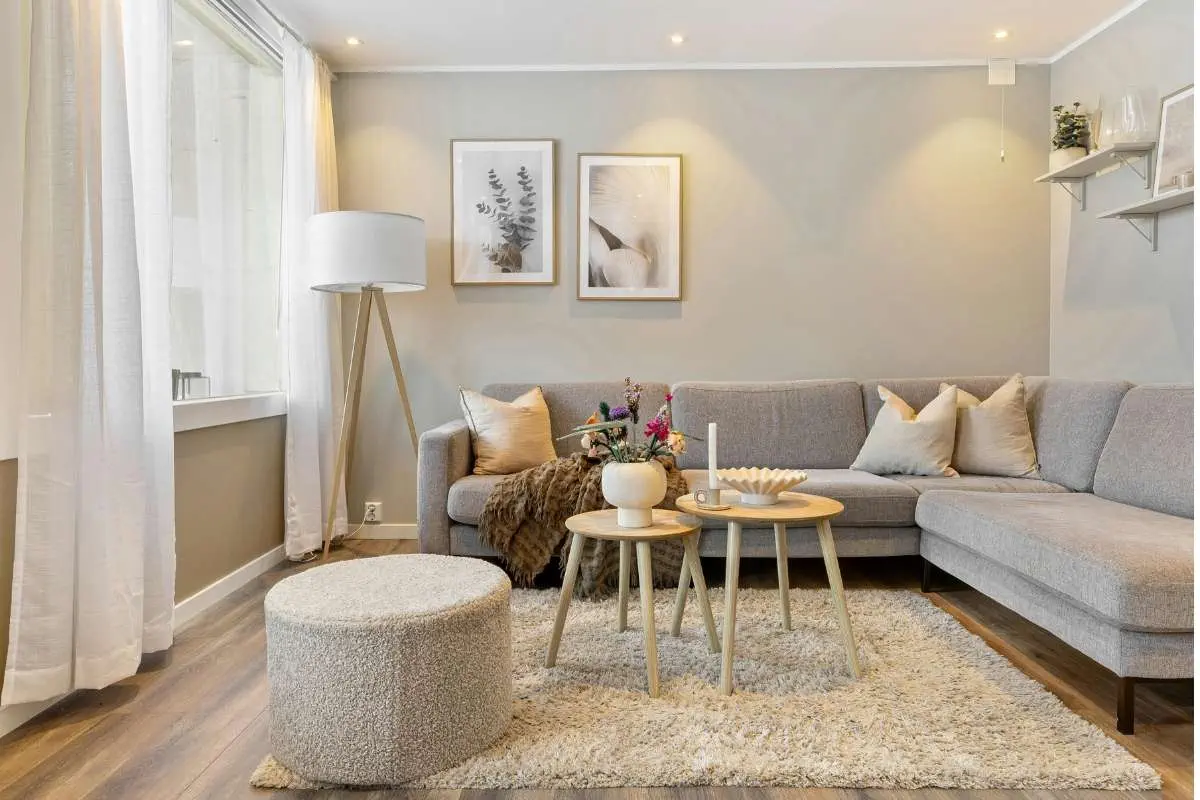
The best ways to get a headboard without drilling are to lean a panel against the bed frame, strap it directly to the frame, use heavy-duty Command strips within their weight limit, or go with a freestanding frame that has its own legs.
The greatest challenge is creating a stylish rental bedroom focal point without wasting the owner’s deposit. Finding practical headboard ideas without drilling depends on four basic non-harmful attachment mechanisms: Bed frame mounting brackets, heavy-duty interlocking strips, supported free-standing panels on the floor, and pressure-mounted tension rods.
According to the Property Lease guidelines, while small pinholes are often considered common wear and tear, deep screw anchor holes of the headboard bracket often deduct from the security deposit.
Whether you want a plush upholstered backrest, a decent wooden feature, or a budget-appropriate DIY panel, here is the complete guide to safely secure the headboard without using a power drill.
Key Takeaways: No-Drill Headboard Mounting
- Frame Attachment: Use the Metal Headboard Adapter Bracket to apply your headboard directly to the steel bed frame instead of the wall.
- Adhesive Range: Heavy-duty interlocking picture-hanging strips up to 16 pounds per set. Use them only on light clothes or foam boards.
- Free Standing Stability: Use rubber bumper pads to protect the thick wood or upholstered panel between the wall and the bed frame.
9 Practical Headboard Ideas Without Drilling
Nine complete, damage-free ways to climb or stylishly headboard without holes in your rent walls.
1. Frame-Mounted Modification Brackets

The safest way to connect the real headboard without touching the drywall is to stick it directly to your bed frame rail. Most metal and wood bed frames have pre-drilled slot holes on the legs, which are specifically designed for headboard bracket bolts.
- Mode Adapter Bracket: If your bed frame’s alignment doesn’t match headboard slots, metal amendment plates fill up the space without a hole in the wall.
- Zero Wall Contact: Since the whole weight is supported by the legs and floor of the bed frame, your walls will remain completely untouched.
- Best for these applications: heavy wooden headboard, solid upholstered panel, and traditional wooden strut leg headboard.
2. Heavy-Duty Interlocking Picture Hanging Strips
For lightweight headboard panels, heavy-duty interlocking adhesive strips (such as Command picture hanging strips) create a strong, removable bond between the panel and the driver.
- Weight capacity principle: Four sets of heavy-duty strips support up to 16 pounds total. Always check your panel’s joint weight before installing.
- Surface Preparation: Clean the wall part with the first alcohol friction. Avoid adhesive strips on walls with fresh paint or textured plaster.
- Best for this: Lightweight Foam Boards, Skinny Plywood Panels, and Lightweight Faux Leather Pads.
✕ Don’t do this: try to hang heavy, solid oak or dense padded headboards using adhesive from the wall alone.
3. Floor-Leaning Panels Secured by Bed Pressure
If you want a significant form of long wood or upholstered headboard without installing hardware, use gravity and cardboard compression.
- Place the wall bumper of the headboard panel against the upper rear edge of the headboard panel to prevent brush marks on your wall paint.
- Slide the headboard panel flush against the wall and push your bed frame strongly against it.
- Why it works: The combined weight of the panel, your cardboard, box springs, and bed frame is safe with no sliding against the wall.
4. Hanging Cushion Headboards via Tension Rods
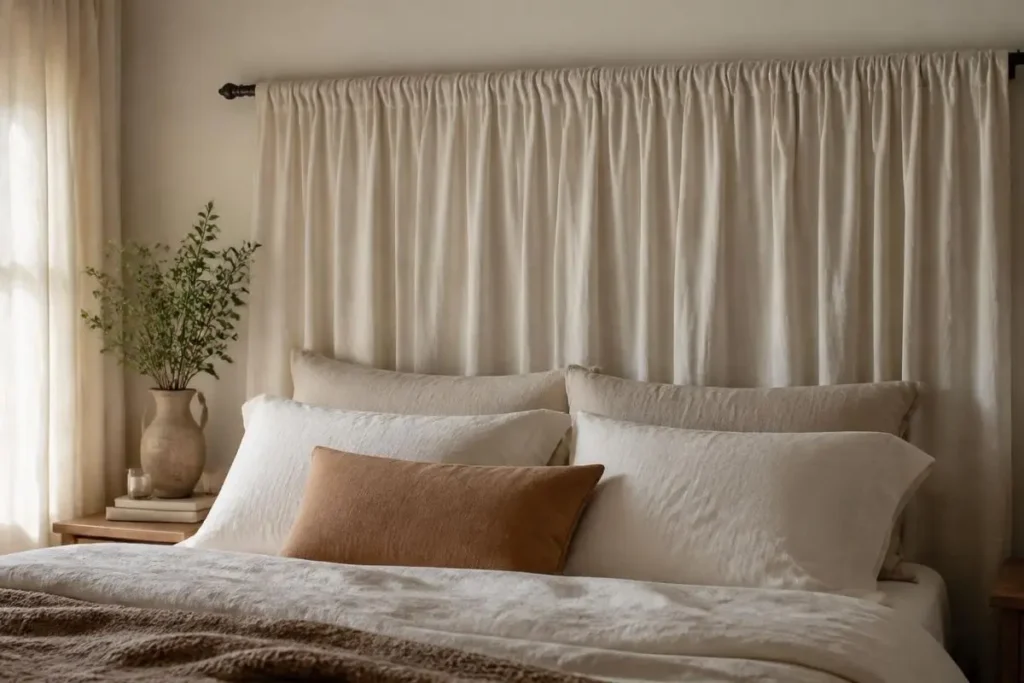
Pending the powered leather or fabric cushion makes a luxurious, hotel-affiliated backrest in which there is zero permanent wall damage.
- Place heavy-duty adjustable tension rods on the wall space behind your bed.
- Straps of leather or fabric with a high-density foam cushion over the rod.
- This floating setup connects exceptionally well when organizing the layout of the apartment or styling the compact, small bedroom decoration arrangements.
✕ Do not do this: Apply tension rods with tension caps without slip rubber on smooth, shiny tiles.
5. Peel-and-Stick 3D Upholstered Wall Tiles
Self-adhesive 3D wall panels provide a modern form of channel tufting or geometric headboards, while 100% live according to the tenant.
- Individual padded tiles are glued directly to the wall surface using the removable baking adhesive.
- You can customize your headboard height and width by adding or removing individual tiles.
6. Freestanding Folding Screens & Room Dividers
Free Standing Wood, Rattan, or Wonderful Bamboo Room The divider acts as a stand-alone board on the floor that doesn’t require installation.
- Open three-panel carved wood screen or rattan divider behind your cardboard.
- The screen stands on its legs, providing complex structure and construction height.
- If you ever migrate, the divider is easily flat-packed with your other multifunctional furniture.
7. Fabric-Wrapped Foam Board (Budget DIY Setup)
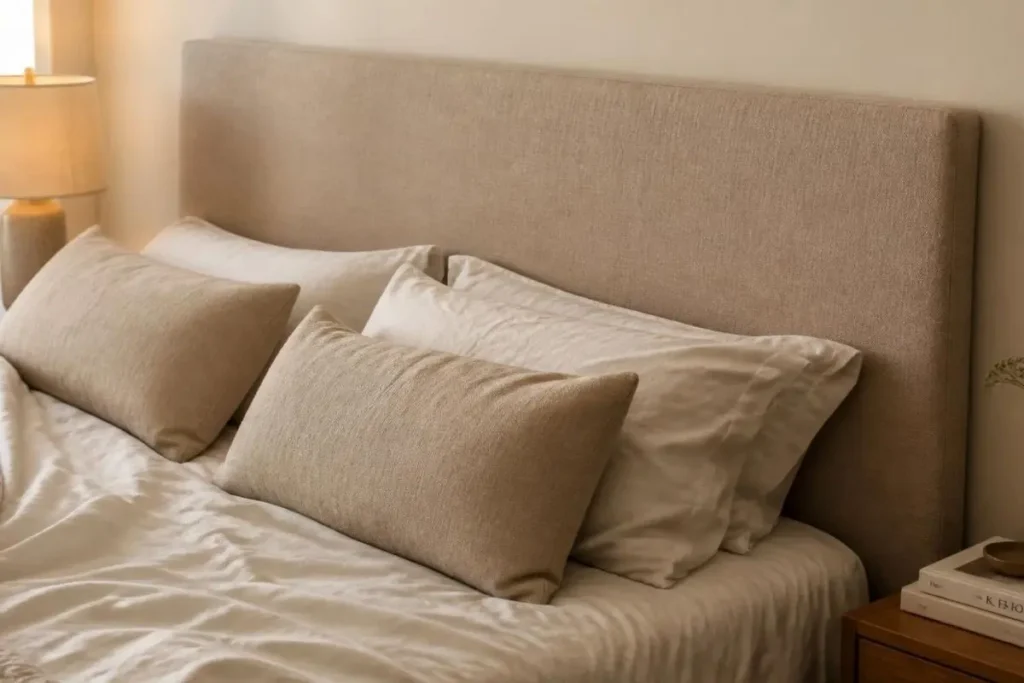
Creating a customized padded headboard requires less than an hour and no power tools.
- Materials: High-density foam insulation board ($15), polyester batting ($8), and 1.5-yard linen or velvet cloth ($12).
- Assembly: Wrap the foam board with batting and apply your outer fabric firmly to the back.
- Mounting: Since the finished panel weight is less than 5 pounds, mount it using heavy-duty adhesive strips or keep it behind strong bed frames.
8. Tapestry and Fabric Wall Drapes
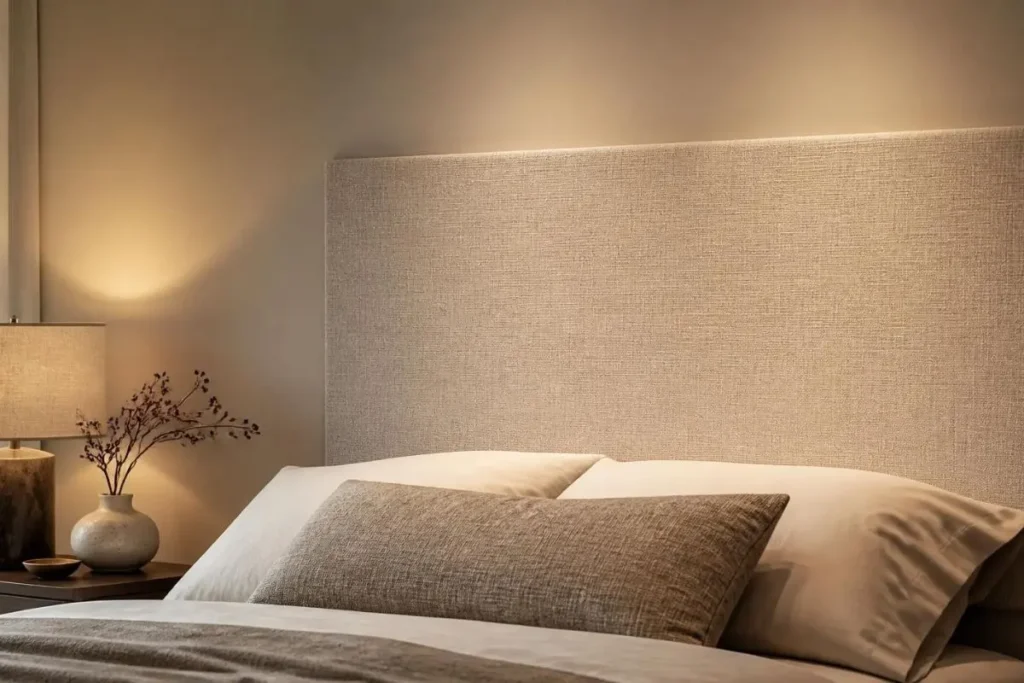
If you prefer a soft, comfortable structure above your bed, then lightweight textile or woven tapestries add visual color and bulk.
- Place lightweight curtain tracks or adhesive hooks high with a wall line.
- Wrap the bed for visual anchorage with lightweight linen, makers, or blended tapes behind the pillows to anchor.
- Textile wall backs work well in entry halls or small places, such as Lu Profile Floor Decoration Ideas.
9. Wall Decals and Peel-and-Stick Murals
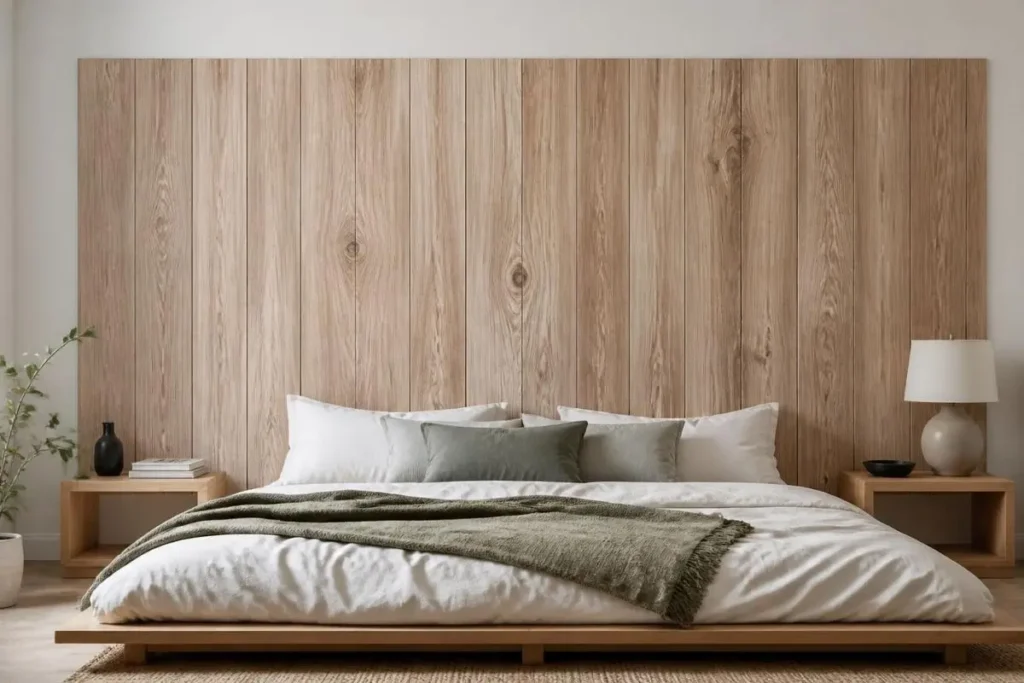
For a zero-clearance effect in tight rooms, vinyl wall decals make a stunning panel or visual substitute for a carved wood headboard.
- The slope and adhesive vinyl decals smoothly adhere to the flat painted walls and peel off cleanly without residue.
- Decals use zero physical floor depth, making them ideal when the floor clearance is limited.
- Mix wall decals with a smart budget, adapted to a high-end look in your bedroom on a tight budget.
Some Headboards Are in Style Now:
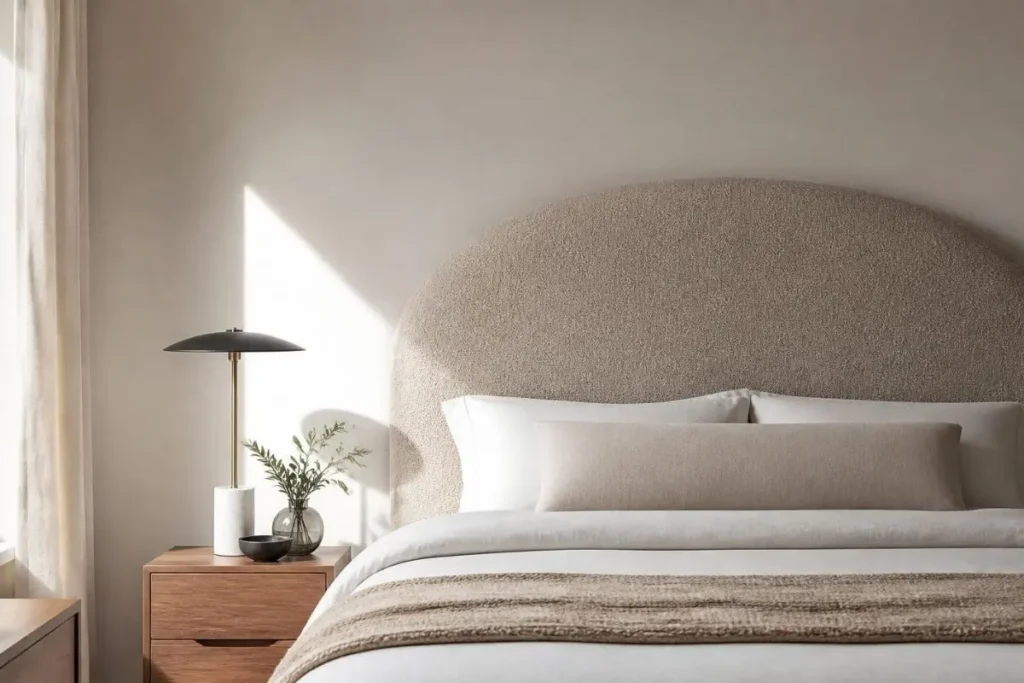
Beyond the 2026 material and shape trends already covered, current style also leans toward pieces that double as function, not just decoration.
- Channel-tufted panels are a step up from plain upholstery, adding texture without needing a patterned fabric
- A wood-and-fabric combination headboard pairs a natural wood frame with a padded center panel
- Low-profile panels: Shorter headboards that sit closer to mattress height are trending over tall, dramatic ones, especially in smaller bedrooms
None of these styles require a different attachment method than what is already covered; above the trend, the look changes, not whether you need a drill.
You can also find a shorter take on this topic on Medium and Blogger.
No-Drill Mounting Method Comparison:
| Method | Best Headboard Material | Setup Time | Security Deposit Safety |
|---|---|---|---|
| Frame Brackets | Heavy Wood or Upholstered | 15 Minutes | 100% Safe (Zero Wall Contact) |
| Adhesive Strips | Foam Board or Fabric | 10 Minutes | 100% Safe (Removable) |
| Floor-Leaning | Solid Timber or Tall Panels | 5 Minutes | 100% Safe (Use Bumper Pads) |
| Tension Rod | Hanging Cushions / Fabric | 15 Minutes | 100% Safe (Pressure Mounted) |
| Peel-and-Stick Tiles | Individual Foam Modules | 20 Minutes | 100% Safe (Use Painter’s Tape Base) |
Damage-Free Rental Protection: Preventing Scuffs & Residue
Protecting your lease contract is more important than avoiding drill holes:
- Stop paint friction: Place the felt pad or rubber bomb on the back of the bumping panels so that the depth of the bed movement can be stopped.
- Clean adhesive removal: When removing Command strips, draw the adhesive tab straight down the parallel bottom of the wall; never pull the side out of your side.
FAQ: Headboard Ideas Without Drilling
How do you attach a headboard to a wall without drilling?
Lean it against the wall behind the bed frame, strap it to the frame itself, or use Command Strips within their weight rating; all skip the wall entirely.
What can I use instead of a headboard?
A tension rod with draped fabric, a peel-and-stick wallpaper panel, a folding screen, or a floating shelf above the bed all create the same visual effect without drilling.
How can I make a headboard cheaply?
A fabric-wrapped foam or cardboard panel typically costs under $30, compared to a $154 average for a store-bought headboard, per Lowerst pricing data.
Will Command Strips hold a headboard safely?
Only lightweight panels. Heavy-duty strips hold roughly 5–16 lbs each, so a thin, light panel works, but solid wood or heavily upholstered headboards need a freestanding or leaning setup instead.
How do you keep a leaning headboard from sliding?
To keep the low headboard stable, anchor the base behind a heavy bed frame and cardboard. Apply rubber bumper pads on the upper edge, which are tied to the wall to create traction and prevent paint scraps.
What is the difference between a headboard alternative and a real no-drill headboard?
An alternative (like a tapestry or gallery wall) replaces the headboard entirely, while a no-drill headboard is still a real panel; it is just anchored to the bed frame, floor, or lightweight adhesive instead of the wall.

Ayesha Khan is a home stylist and interior layout strategist and the founder of Webpluse. She specializes in transforming compact residential spaces through practical apartment decorating ideas, high-density storage solutions, and budget-friendly home improvement strategies—all tested in her own rental apartments. Her guides help a global audience across the United States, France, and Germany furnish and style small spaces without overspending.