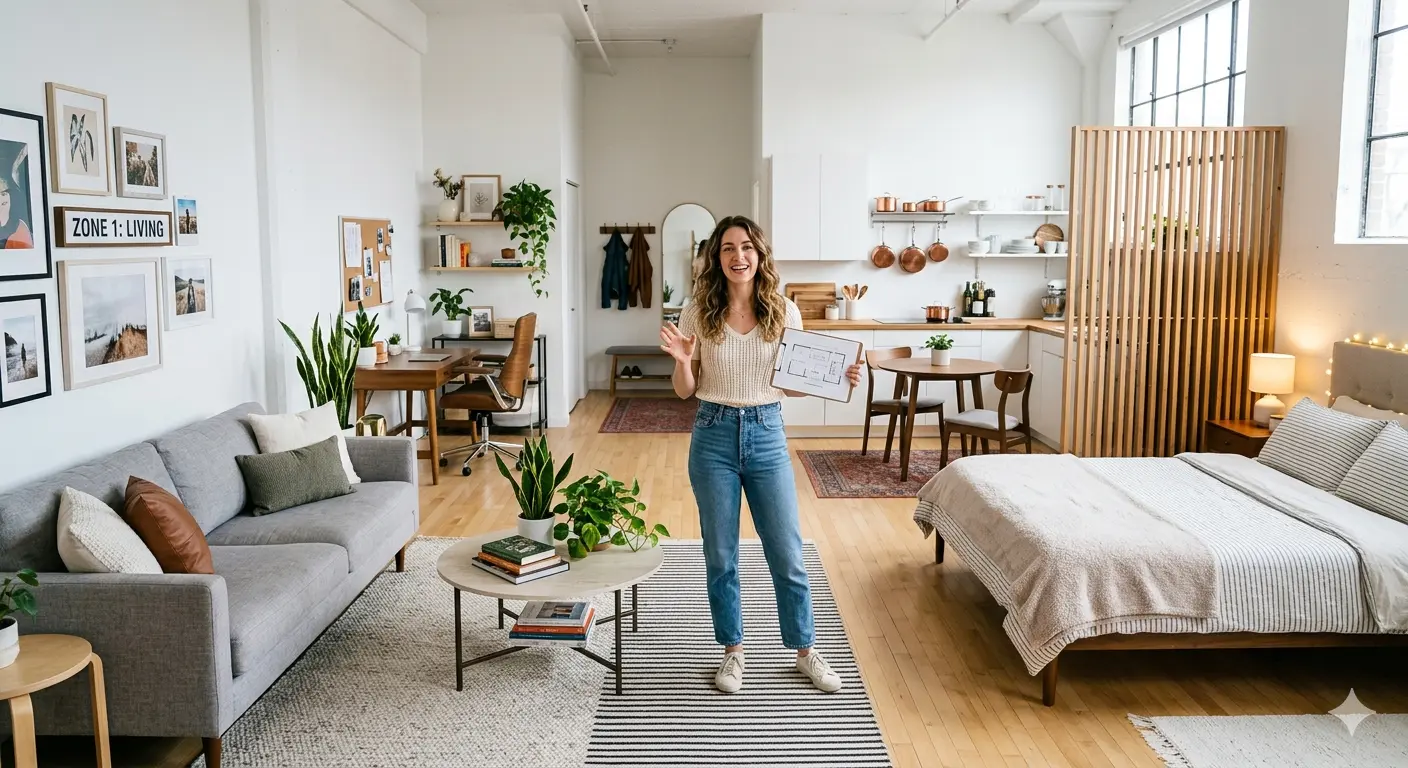
Your bedroom probably isn’t as small as it feels. It’s just working against you. Learning how to make a small bedroom look bigger doesn’t take a renovation budget, just the right layout, color, and light.
The average bedroom in the U.S. is 132 square feet, about 11 by 12 feet, according to industry sizing data compiled by HomeGuide and Cedreo. If yours feels tighter than that, the problem usually isn’t the square footage. It’s the layout, the color, and where the light is (or isn’t) landing.
You don’t need a contractor to fix that. You need about a weekend and a short list of changes that don’t require touching a wall.
“If you’re tackling the whole apartment, not just the bedroom, check out our one-bedroom decorating ideas on a budget for a room-by-room plan.”
Why Does a Small Bedroom Feel Even Smaller Than It Is?
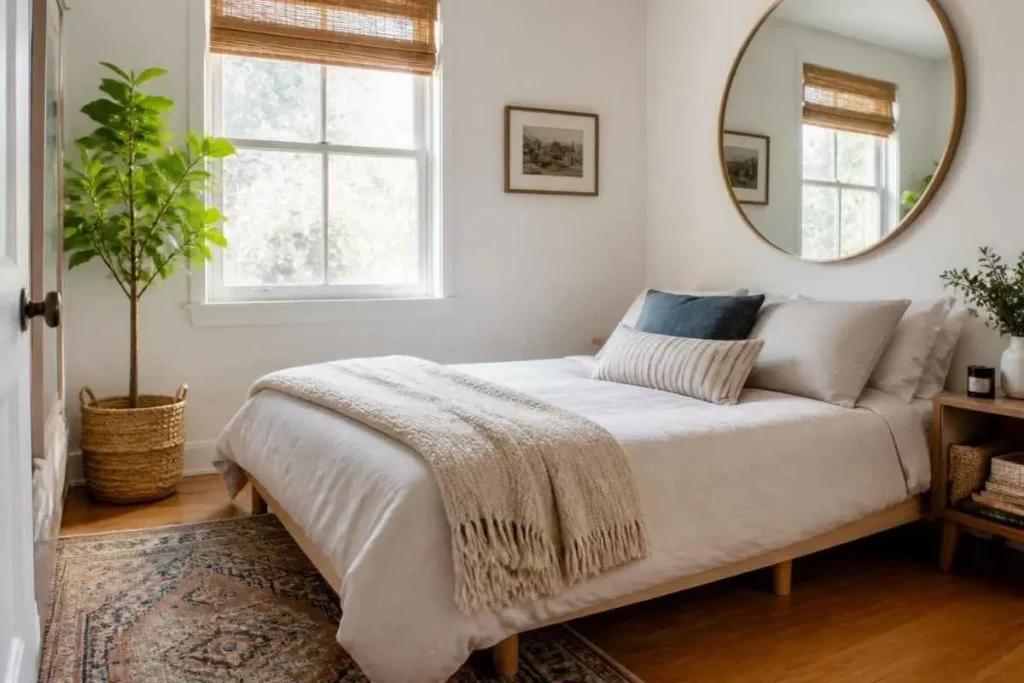
A bedroom feels small when your eye keeps stopping at a dark wall, a bulky headboard, or a cluttered dresser top. Every stop tells your brain “the room ends here,” even when it doesn’t.
Designers call this visual weight. Heavy colors, tall solid furniture, and clutter all add visual weight, which makes a room read smaller than its actual measurements. Strip that weight away, and the same square footage suddenly feels roomier.
This matters more than people think. The average adult spends close to a third of their life in the bedroom, according to estimates cited by CRD Design Build, so a room that feels cramped isn’t just an aesthetic problem; it’s a daily one.
To make your bed stand out without making the room feel cluttered, try using these headboard ideas without drilling for a modern, rental-friendly look.
Does Paint Color Actually Make a Room Look Bigger?
Yes, and it’s measurable, not just a design opinion. Paint has a Light Reflectance Value (LRV), a 0–100 scale that shows how much light a color bounces back into a room.
Colors with an LRV above 50 reflect more light than they absorb, which is what creates that open, “daytime” feel designers talk about, per LRV guidance from Diamond Vogel. Popular near-white shades like Sherwin-Williams High Reflective White sit around LRV 93, close to the top of the scale.
What this means for your bedroom:
- Paint walls, trim, and ceiling in a similar light tone so the eye doesn’t catch a hard stop at the corners
- Look for an LRV of 60+ if you want a genuinely brightening effect, not just “light beige.”
- Save darker tones for a single accent wall behind the headboard, where a boundary is fine
You’re not stuck with boring white, either. Soft greige, pale sage, and warm oat tones all sit in that higher-LRV range while still having personality.
Can Mirrors Really Make a Bedroom Feel Twice as Big?
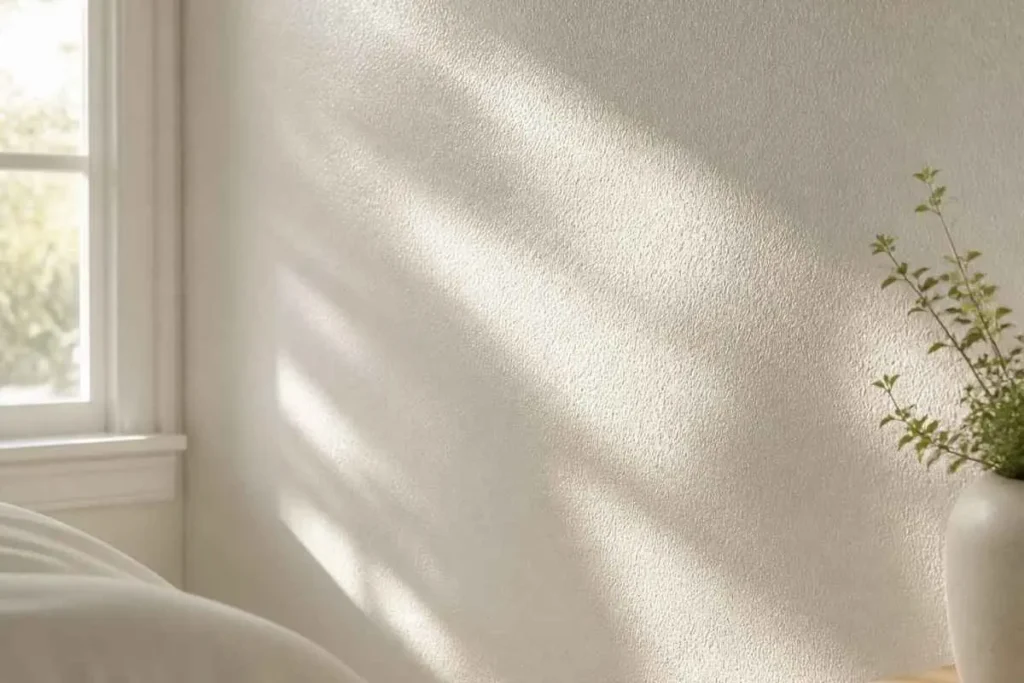
Mirrors don’t add space, but they trick your eye into perceiving more of it, and placement decides whether that trick works.
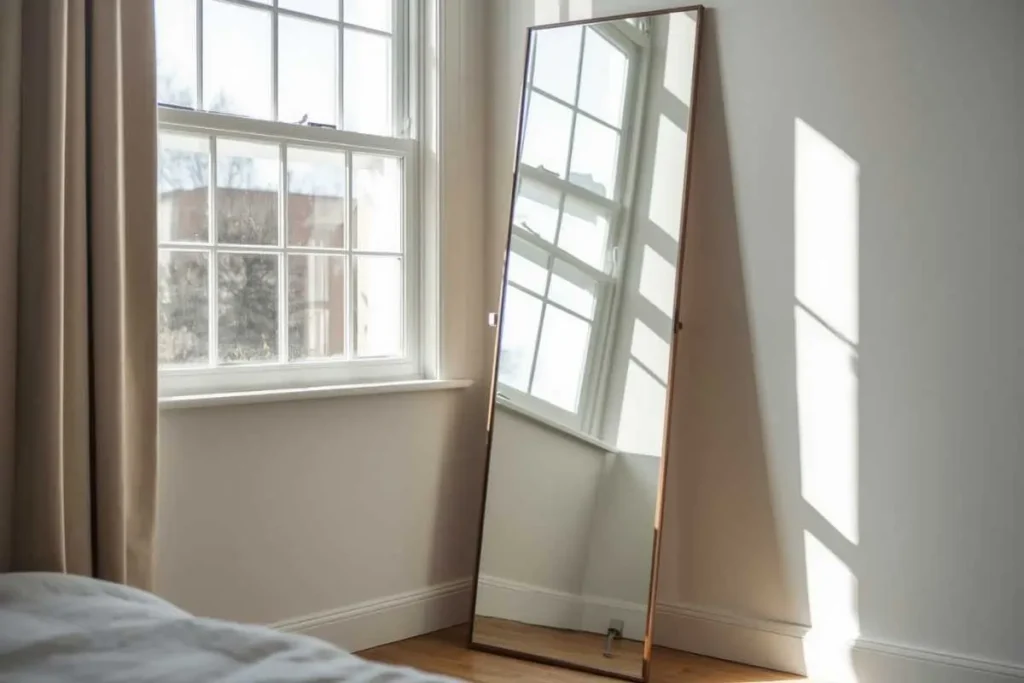
A mirror hung directly across from a window reflects both the outdoor view and the natural light entering the room, effectively doubling the sense of depth. A mirror facing a blank wall does almost nothing.
Where mirrors actually earn their keep in a small bedroom:
- Opposite or beside a window, angled to catch daylight
- On a closet door, replacing a solid panel
- Leaning tall in a corner instead of a small framed piece
Skip the gallery of tiny decorative mirrors. A single large piece reads as intentional; five small ones read as clutter, which cancels out the effect you’re going for. Get the mirror placement right, and you’ve solved half of how to make a small bedroom look bigger without spending anything.
What Furniture Layout Makes a Small Bedroom Feel Open?
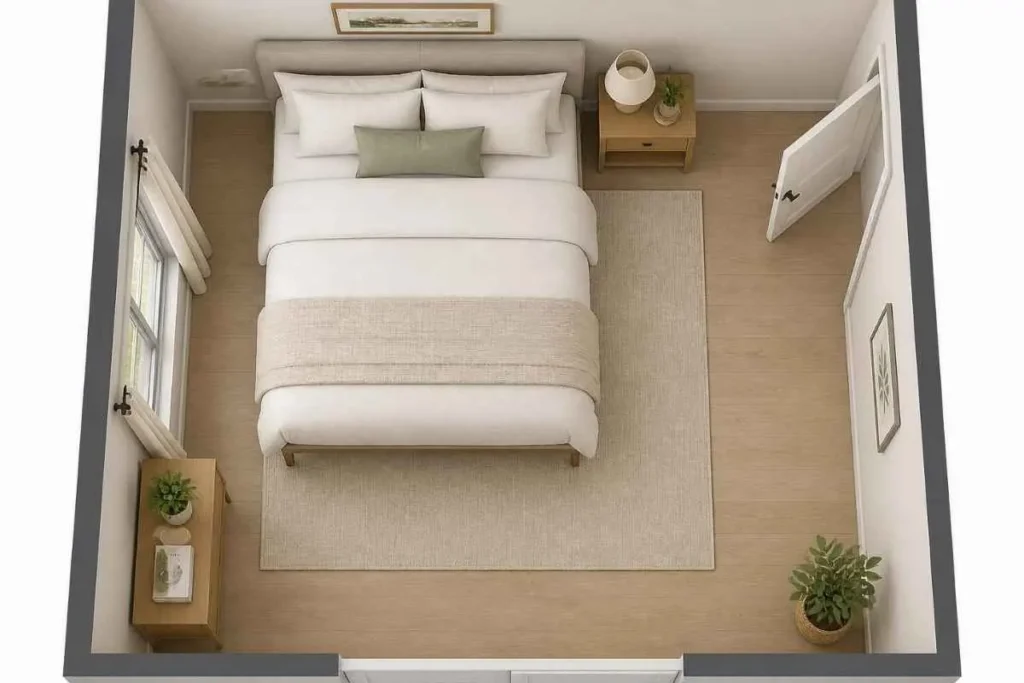
Start with the bed, not the decor. Push it against the longest wall, keep both walking paths clear, and resist the urge to float it in the center unless the room genuinely allows it.
“For the closet itself, check out our small closet organization ideas for renters for no-drill storage fixes.”
A cramped bedroom is often a layout problem before it’s a size problem. There’s actually a rule of thumb designers use: a bedroom should measure roughly three times the footprint of the bed itself for comfortable movement, sometimes called the 3:1 guideline, referenced in bedroom-sizing breakdowns from HomeGuide.
Quick layout fixes that need zero tools:
- Choose furniture with visible legs; a bed frame or dresser you can see under looks lighter than one that sits flush on the floor
- Keep nightstands narrow; a slim 12-inch table does the same job as a bulky 20-inch one
- Angle furniture away from doorways so the first thing you see on entry is open floor, not a dresser
If your lease doesn’t allow you to move built-in storage, you can still control everything freestanding, which, in most rentals, is most of the room. If your bedroom is part of an open studio layout, our guide on how to style a studio apartment covers zoning tricks that work well here too.
Does Lighting Layout Matter More Than the Fixture Itself?
Yes. One overhead bulb creates hard shadows that shrink a room visually, no matter how bright the bulb is. Layered light does the opposite.
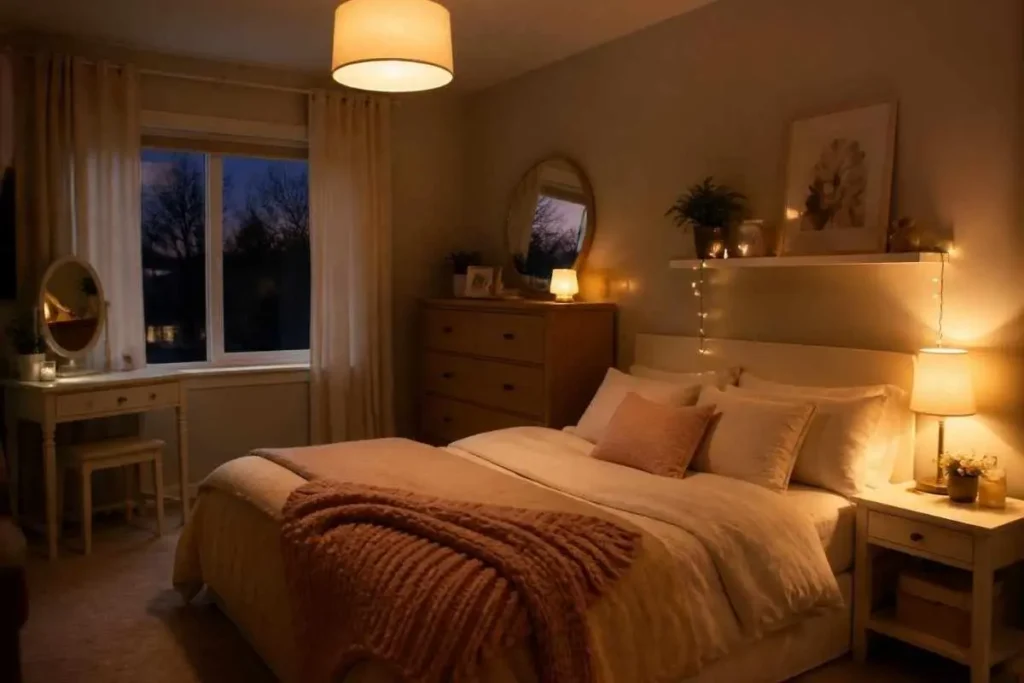
Combine at least two light sources, a ceiling fixture plus a lamp, or two lamps at different heights, so light hits the room from multiple angles and shadows soften. This is the same principle photographers use to avoid flat, harsh images.
A simple layering formula for a small bedroom:
- One ambient source (ceiling light or plug-in pendant)
- One task source (a reading lamp by the bed)
- One accent source (a small uplight or fairy lights behind a headboard)
Warm white bulbs (2700K–3000K) read as cozy rather than clinical, which matters in a room this size. Cool white light in a small space can feel closer to an office than a bedroom.
What’s the Fastest No-Tool Way to Make the Room Feel Bigger Today?
Declutter the surfaces you can see from the doorway. Not the closet, not under the bed, just what’s visible at eye level.
A dresser top with twelve small objects on it reads as chaos, even if every object is useful. A dresser top with three curated pieces reads as calm. Calm equals spacious, at least to the eye.
A 20-minute reset that actually moves the needle:
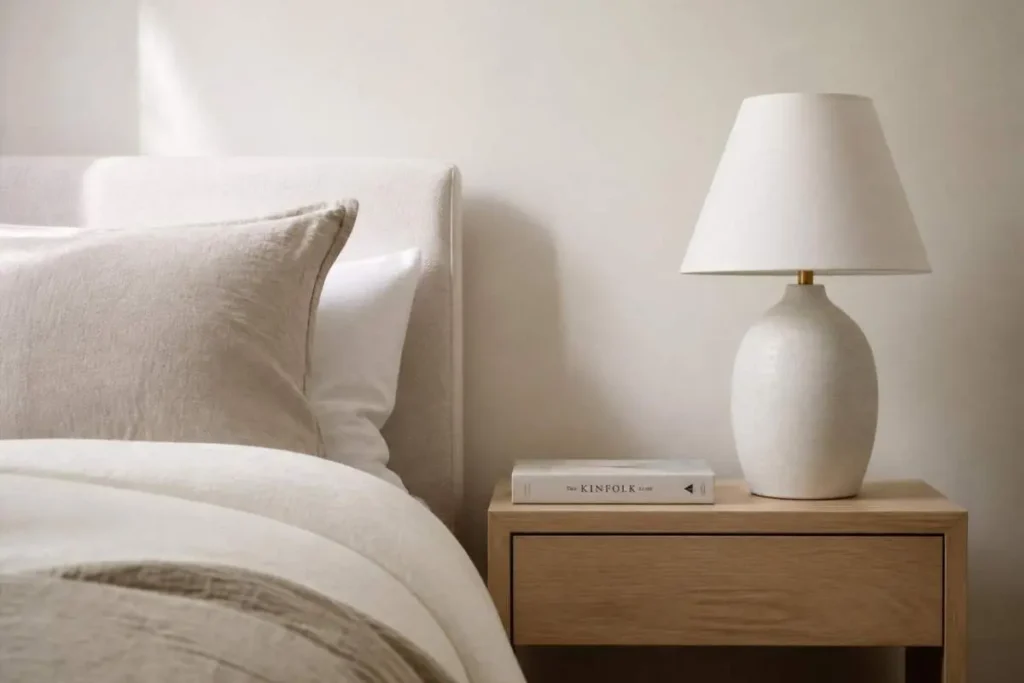
- Clear everything off the nightstand except a lamp and one book
- Reduce dresser-top items to three or fewer
- Store off-season clothing somewhere it can’t be seen (under-bed bins work well here)
- Make the bed; an unmade bed adds visual noise that a made one simply doesn’t
None of this requires buying anything. It’s the cheapest fix on this list, and often the most noticeable.
Is It Worth Going Vertical in a Small Bedroom?
Almost always, yes. Floor space is limited in a small bedroom, but wall space rarely is, and that’s the space most people forget to use.
Tall, narrow storage (a slim bookshelf, a wall-mounted shelf above the headboard) draws the eye upward, which makes the ceiling feel higher without changing a single measurement. This works especially well in older apartments, where bedrooms tend to run smaller than the national average in the first place.
Vertical wins that don’t need a drill:
- Command-strip-rated floating shelves above the headboard for books or plants
- An over-the-door organizer on the closet door for shoes or accessories
- A tension-mounted curtain rod for a second hanging layer inside the closet
“For the closet itself, check out our small closet organization ideas for renters for no-drill storage fixes.”
“Pairing these layout tricks with a full small apartment storage plan will help your bedroom stay both open and organized.”
How Much Does It Actually Cost to Do This Without Renovating?
Less than a single piece of new furniture, in most cases. A full refresh of paint, one mirror, layered lighting, and basic organizers typically run $100 to $300, depending on how many of these items you already own.
Compare that to a bedroom remodel, for which industry cost data from Angi puts between $3,500 and $40,000 depending on scope. The gap between “renovate” and “refresh” isn’t small; it’s the difference between a weekend project and a construction permit. That’s really the core of how to make a small bedroom look bigger: light bouncing where it should.
How to Make a Small Bedroom Look Bigger: Where to Start
Don’t try all seven fixes in one afternoon. Pick the one your room needs most, and build from there.
Room feels dark? Start with paint and lighting layers.
Room feels cluttered? Start with the 20-minute surface reset.
Room feels cramped when you walk in? Start with the layout and furniture legs.
Room feels flat and boxy? Start with the mirror and vertical shelving.
A small bedroom isn’t a design failure. It’s just a room that hasn’t had its light, color, and layout working in the same direction yet. Fix that, and the square footage stops being the main character.
“For a complete room-by-room budget plan, see our full guide to small bedroom decorating ideas on a budget.“
FAQ: Making a Small Bedroom Look Bigger
What is the fastest way to make a small bedroom look bigger?
Decluttering visible surfaces, the nightstand, and the dresser top gives the most noticeable change with the least effort and costs nothing.
Does a lighter paint color really make a room feel bigger?
Yes. Paint colors with a light reflectance value above 50 bounce back more light than they absorb, which visually opens up a room, according to LRV data from Diamond Vogel.
Where should I put a mirror in a small bedroom?
Directly across from or beside a window, so it reflects both daylight and the outdoor view rather than a blank wall.
Is it better to use one large mirror or several small ones?
One large mirror reads as intentional and doubles perceived depth; several small mirrors tend to read as clutter and work against the effect.
How much does a no-renovation bedroom refresh typically cost?
Usually $100–$300 for paint, a mirror, lighting, and basic organizers, compared to $3,500–$40,000 for a full remodel, per Angi cost estimates.

Ayesha Khan is a home stylist and interior layout strategist and the founder of Webpluse. She specializes in transforming compact residential spaces through practical apartment decorating ideas, high-density storage solutions, and budget-friendly home improvement strategies—all tested in her own rental apartments. Her guides help a global audience across the United States, France, and Germany furnish and style small spaces without overspending.