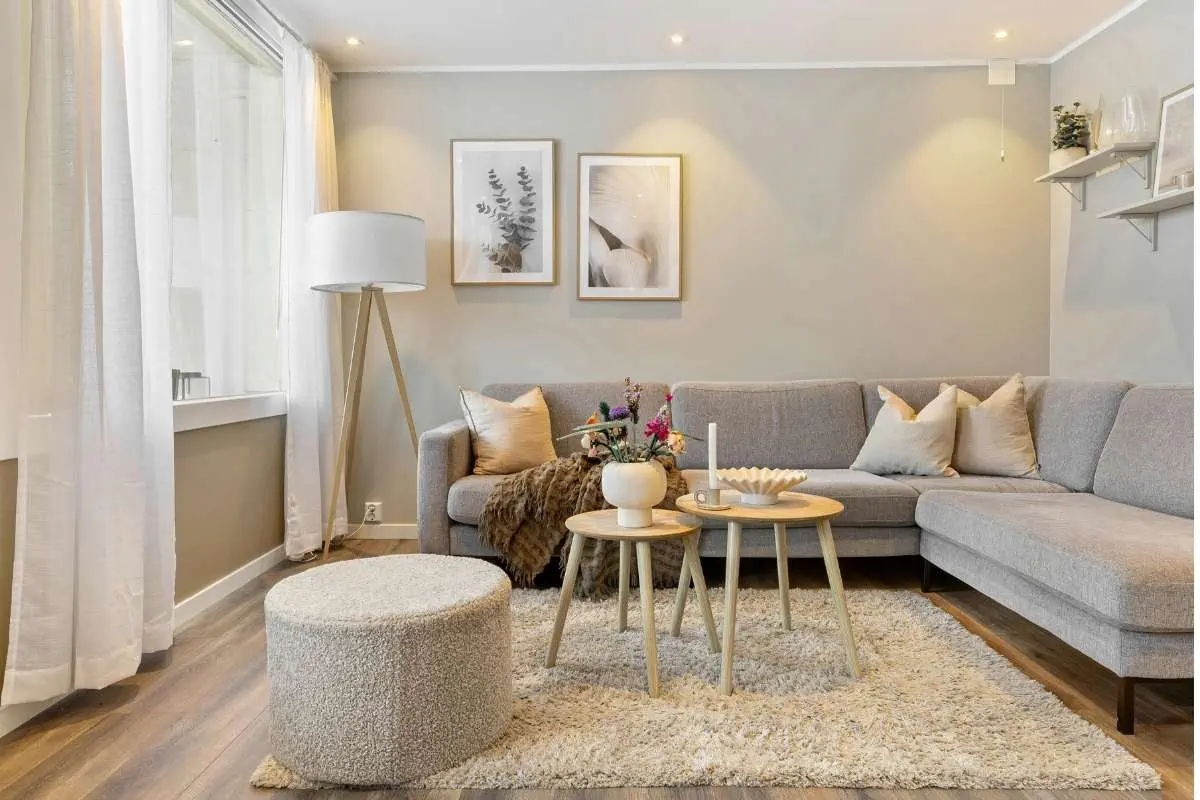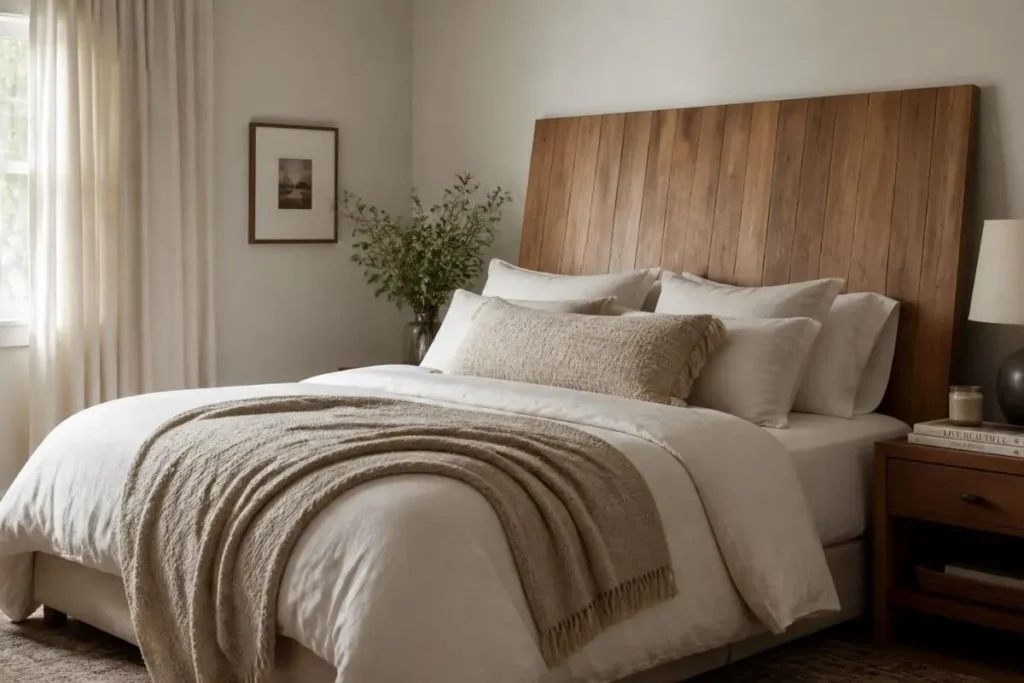
The best ways to get a headboard without drilling are to lean a panel against the bed frame, strap it directly to the frame, use heavy-duty Command strips within their weight limit, or go with a freestanding frame that has its own legs.
Looking for headboard ideas without drilling that still look intentional, not like a dorm room fix? You are not alone; this is one of the most searched renter decorating questions out there, and most guides answer it with decor swaps instead of real attachment methods.
According to move-out damage guidance cited by RentSpree, small nail holes are generally considered normal wear and tear, but large screw holes or an excessive number of holes can be charged back to your security deposit. That is exactly why “no drilling” matters; it is not just a style choice; it protects your deposit too.
This guide covers real ways to attach a headboard (not just alternatives to one), what actually holds weight safely, the cheapest materials to use, and where headboard trends are heading in 2026.
How Do You Attach a Headboard Without Drilling?
You do not attach it to the wall at all; you attach it to the bed frame, or you let gravity and weight do the work instead of screws.
- Lean it. A flat panel leaned against the wall behind the bed frame stays upright because the frame blocks it from sliding
- Strap it to the frame. Some headboard brackets clamp directly onto the bed frame or box spring rails; no wall contact needed
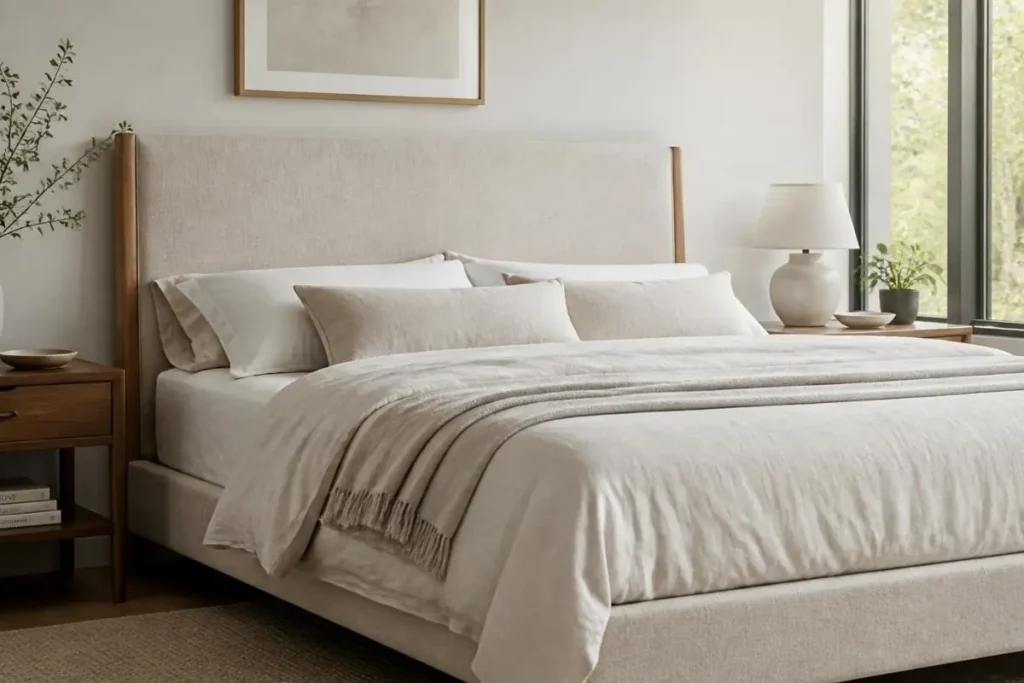
- Use a freestanding frame. Bed frames with a built-in headboard mount skip the wall entirely; the headboard attaches to the frame, not the room
This is the difference between a “headboard alternative” and an actual headboard: you are still using a real headboard panel, just anchoring it somewhere other than drywall.
How Do You Attach a Freestanding Headboard?
Most freestanding headboards use their own legs or a base that sits on the floor next to the bed frame, independent of the mattress or wall.
- Legs should be wide enough at the base to resist tipping; check the footprint before buying
- Push the headboard flush against the bed frame so the frame itself adds stability
- For extra security, some freestanding frames have brackets that bolt to the bed frame (not the wall). This is still 100% drill-free on the wall.
Is There a Way to Attach a Headboard Without Screws at All?
Yes, Command Strips work, but only within their weight limit. Heavy-duty Command Strips typically hold about 5 to 16 pounds per strip, which is enough for a lightweight, thin panel but not a solid wood or heavily upholstered one.
- Use multiple strips spread evenly across the back of the panel, not just two in the corners
- Test on a small area first. Textured or freshly painted walls hold adhesive less reliably
- If your panel weighs more than what your strips are rated for combined, skip adhesive and go with a leaning or freestanding method instead.
What Can I Use Instead of a Headboard?
If you do not want a traditional panel at all, several no-wall-damage substitutes create the same visual effect.
- Tension rod + fabric: a curtain rod wedges between the walls with pressure, no drilling, and a fabric panel drapes over it
- Removable wallpaper or peel-and-stick panels mimic a wood-panel or upholstered headboard look
- A folding screen: doubles as a headboard and packs flat when you move
- A floating shelf styled above the bed: works well in small bedrooms where a bulky headboard would crowd the room; pairs well with the vertical storage tricks in our small bedroom guide.
What is a Good Substitute If I Want Something Soft?
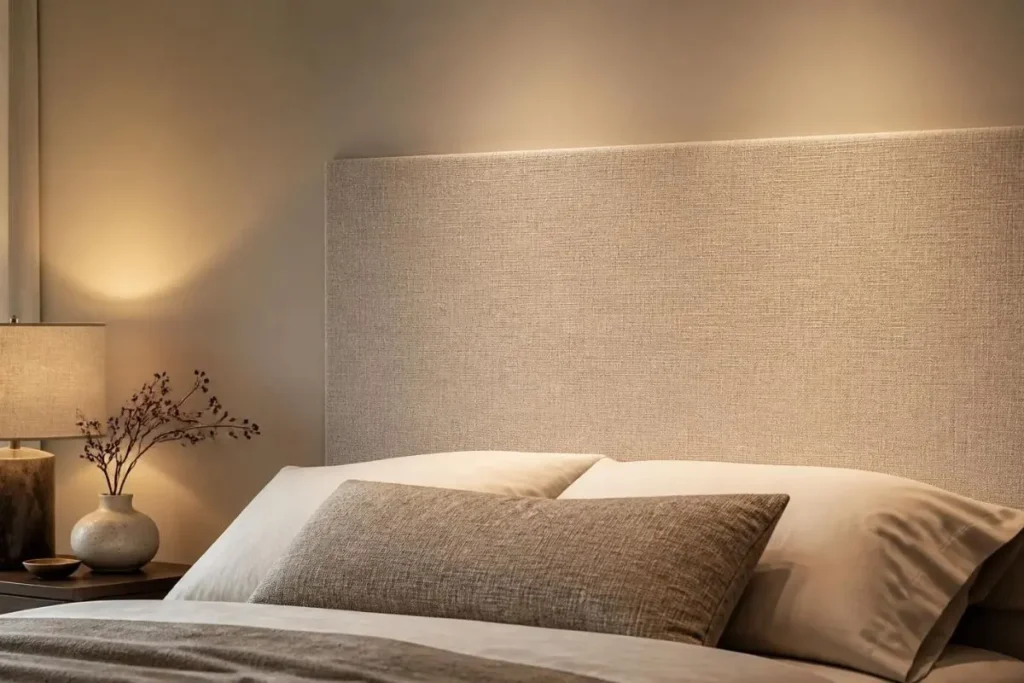
Fabric-based options tend to feel the most like a “real” headboard because they add texture and softness the way upholstery does.
- A large tapestry or textile hung from a tension rod
- A fabric-wrapped foam or cardboard panel, leaned rather than mounted
- Layered pillows stacked against the wall behind the sleeping area for a low-effort soft backdrop
How Can I Make a Headboard Cheaply?
The materials matter more than the technique. Most budget headboards use the same core idea: a flat, lightweight panel covered in something visually interesting.
- Cardboard or foam board wrapped in fabric is the cheapest option, often under $30 in materials
- Plywood scrap painted or stained, slightly higher cost, more durable
- Placemats and a table runner stitched or glued together for a woven look, a genuinely clever low-cost DIY that costs less than $20
Compare that to a store-bought headboard, which averages $154 with a typical range of $44 to $398, according to pricing data from Lowerest. A DIY panel built from scratch usually lands well under $50.
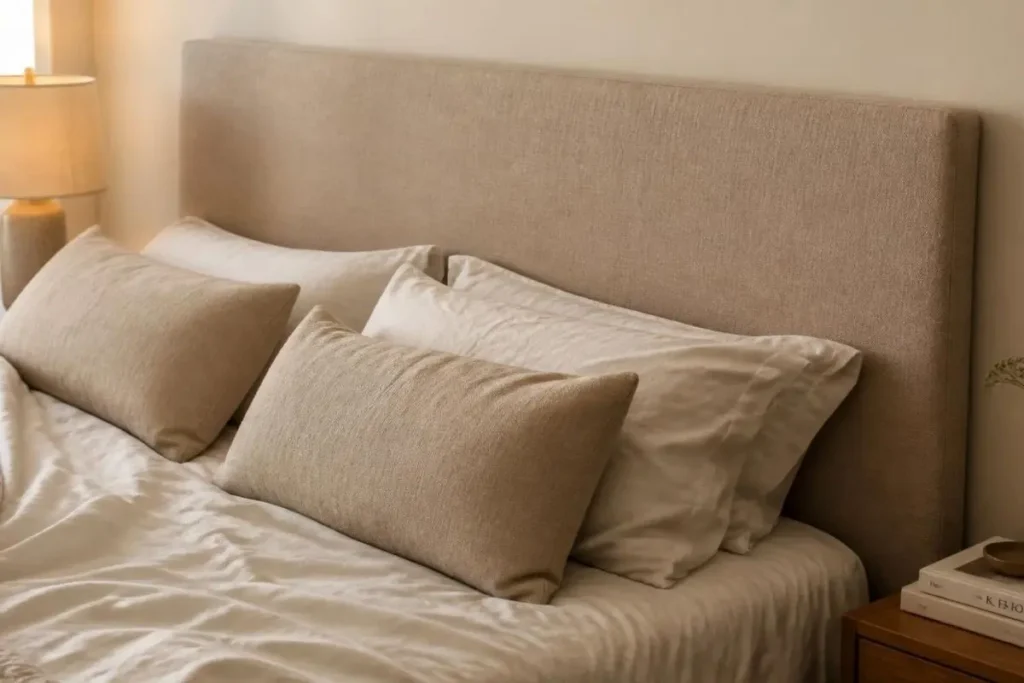
What Materials Make a Good DIY Headboard?
Not every material holds up the same way once it is leaned or hung for months at a time.
- Foam board: lightest option, easiest to work with, but can bow over time if not framed
- Thin plywood (¼ inch) is sturdier, holds its shape, still light enough to lean safely
- Fabric alone (no backing) works only with a rod, not as a standalone leaning panel
Where Can I Get an Affordable Headboard?
If DIY is not your thing, budget-friendly options still exist without having to buy a $300+ piece.
- Facebook Marketplace and thrift stores often have solid headboards for $20–$50 that need a coat of paint or new fabric
- Big-box retailers carry basic upholstered panel headboards in the $60–$100 range
- Peel-and-stick headboard decals run $25–$60 and require zero assembly.
What Are the Headboard Trends for 2026?
Trends shift the look, not the method; you can apply any of these styles to a no-drill setup.
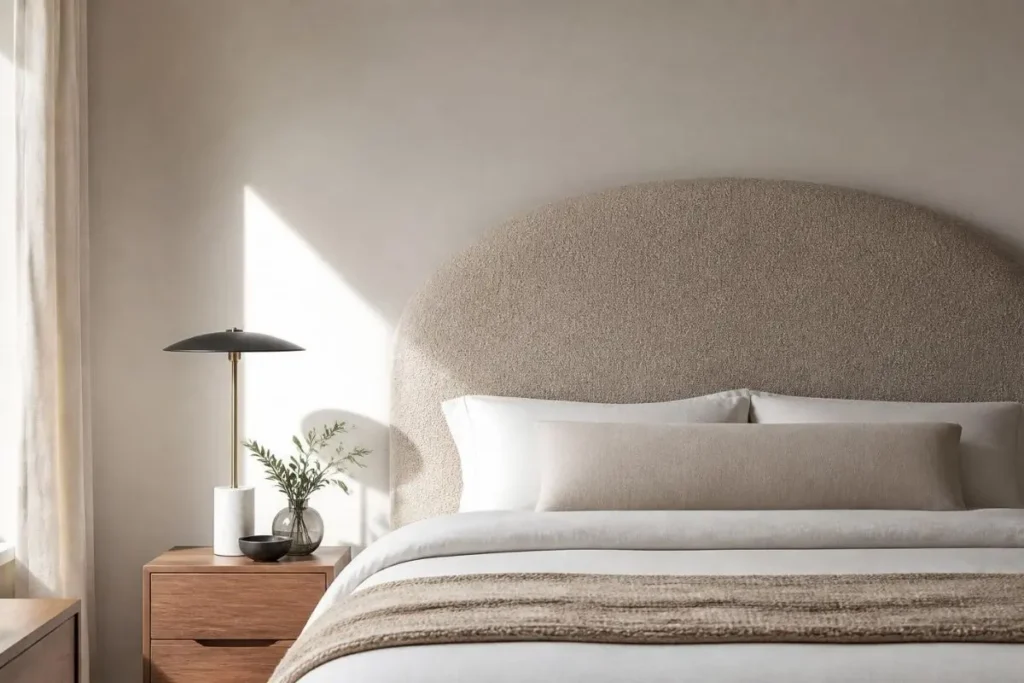
- Curved and arched panels: softer silhouettes are replacing sharp, rectangular headboards
- Warm, textured fabrics: boucle and nubby linen are showing up more than flat cotton
- Two-tone and color-blocked panels: a break from the single-color headboard of past years
- Natural materials: rattan and cane detailing paired with wood tones
What Color Headboard Goes With Everything?
Neutral, low-saturation tones stay the most flexible if you plan to change your bedding or wall color often.
- Warm oat or greige works with almost any accent color.
- Soft white or cream keeps the room feeling airy, the same light-reflecting logic covered in our small bedroom look bigger guide.
- Charcoal or deep navy works as a bold anchor if the rest of the room stays neutral.
How Do I Elevate a Bed Without a Headboard?
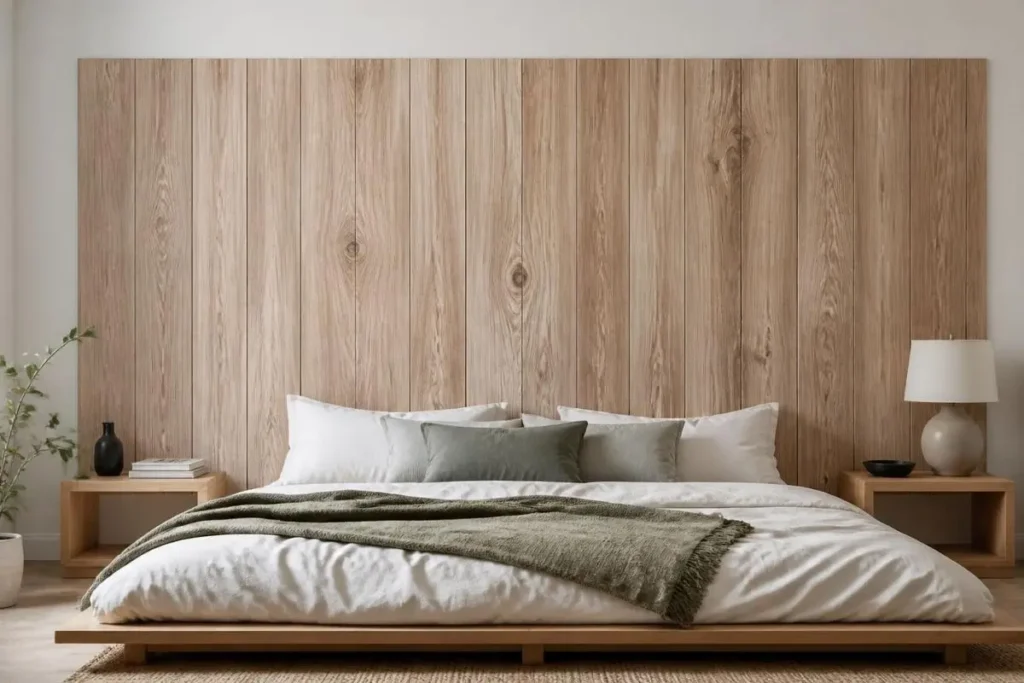
“Elevating” here means making the bed look finished and intentional, not literally raising it, and it comes down to what is happening above and around it, not the headboard itself.
- Add height with a floating shelf or a piece of art that extends above the pillow line
- Use layered bedding: a duvet, a throw, and 3–4 pillows read as “styled” even with a bare wall behind them
- Bring in a pair of matching nightstand lamps at slightly different heights to frame the bed visually, the same way a headboard would
How Do I Style a Bed Without a Headboard?
Treat the wall behind the bed as a small design project on its own, separate from the bed itself.
- Center a single large piece of art or a mirror directly above the pillow line
- Keep bedding tones consistent with the wall color so the whole area reads as one composition, not two mismatched halves
- Add one soft texture element, a hanging textile, a woven wall hanging, or a curtain panel, to avoid a flat, empty look
What Kind of Headboards Are in Style Now?
Beyond the 2026 material and shape trends already covered, current style also leans toward pieces that double as function, not just decoration.
- Channel-tufted panels are a step up from plain upholstery, adding texture without needing a patterned fabric
- A wood-and-fabric combination headboard pairs a natural wood frame with a padded center panel
- Low-profile panels: shorter headboards that sit closer to mattress height are trending over tall, dramatic ones, especially in smaller bedrooms
None of these styles require a different attachment method than what is already covered; above the trend, the look changes, not whether you need a drill.
Yes, and this is worth taking seriously. Guidance on move-out charges compiled by RentSpree notes that while small nail holes are typically treated as normal wear and tear, larger screw holes or an excessive number of holes can be billed to tenants as damage.
- A leaning, freestanding, or Command Strip headboard leaves no holes to explain at move-out
- Even “small” drilled anchors for a mounted headboard bracket can add up if you also hung shelves, art, and curtain rods the same way
- Skipping the drill on this one item is a small trade that adds up across a whole apartment
Final Thought
A headboard job is to frame the bed, not to prove it is permanently attached to the wall. Every method here treats it as furniture you place, not hardware you install, which means it comes with you when you move and never puts your deposit at risk.
Start with whichever fits your room: lean a panel if you want the simplest fix, or grab a tension rod and fabric if you want something soft and finished tonight. For more no-damage upgrades that pair well with this one, check out our guides on DIY headboard ideas that need zero drilling, small closet organization ideas for renters, how to make a small bedroom look bigger without renovation, and small bedroom decorating ideas on a budget.
You can also find a shorter take on this topic on Medium and Blogger.
Reach for This Method Based on Your Situation
Not every no-drill method fits every room or budget; match the method to what actually matters most for your space right now.
| Your priority | Best no-drill method |
|---|---|
| Fastest setup tonight | Tension rod + fabric |
| Lowest cost | Fabric-wrapped cardboard or foam |
| Most durable / heaviest look | Freestanding frame with legs |
| Small bedroom, no floor space to spare | Peel-and-stick decal |
| Want it to move with you easily | Folding screen |
These same methods work just as well in a foyer, where a bench or console table needs zero wall contact to look finished.
FAQ: Headboard Ideas Without Drilling
How do you attach a headboard without drilling into the wall?
Lean it against the wall behind the bed frame, strap it to the frame itself, or use Command Strips within their weight rating; all skip the wall entirely.
What can I use instead of a headboard?

A tension rod with draped fabric, a peel-and-stick wallpaper panel, a folding screen, or a floating shelf above the bed all create the same visual effect without drilling.
How can I make a headboard cheaply?
A fabric-wrapped foam or cardboard panel typically costs under $30, compared to a $154 average for a store-bought headboard, per Lowerst pricing data.
Will Command Strips hold a headboard safely?
Only lightweight panels. Heavy-duty strips hold roughly 5–16 lbs each, so a thin, light panel works, but solid wood or heavily upholstered headboards need a freestanding or leaning setup instead.
Do headboard screw holes really affect my security deposit?
They can. Large or excessive screw holes may be billed as damage rather than normal wear and tear, according to move-out guidance from RentSpree.
What is the difference between a headboard alternative and a real no-drill headboard?
An alternative (like a tapestry or gallery wall) replaces the headboard entirely, while a no-drill headboard is still a real panel; it is just anchored to the bed frame, floor, or lightweight adhesive instead of the wall.

Ayesha Khan is a home stylist and interior layout strategist and the founder of Webpluse. She specializes in transforming compact residential spaces through practical apartment decorating ideas, high-density storage solutions, and budget-friendly home improvement strategies—all tested in her own rental apartments. Her guides help a global audience across the United States, France, and Germany furnish and style small spaces without overspending.