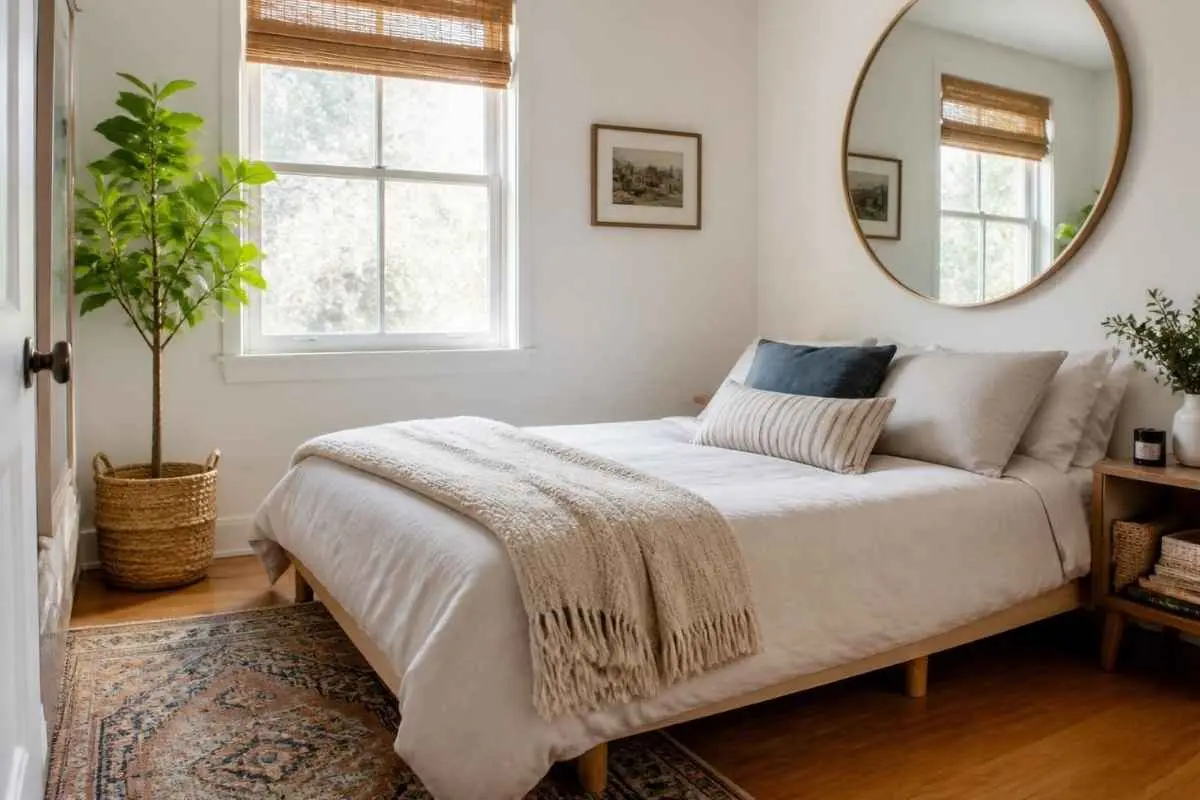
Executing modern home improvement projects on a budget requires targeting high-impact areas like lighting, hardware, and wall textures. Replacing outdated cabinet handles, installing smart thermostats, adding peel-and-stick backsplashes, and updating fixtures instantly elevates property value without major renovation costs.
High-Impact Home Improvement Tips or Upgrades for Any Budget:
High-impact home improvement upgrades for any budget do not require a massive renovation budget to upgrade your living space. Strategic, low-cost increases can dramatically improve both your home functionality and visual appeal while protecting your investment.
- Change Cabinet and Drawer Hardware: Convert old kitchen and bathroom handles to modern matte black or brushed brass to upgrade cabinets instantly without expensive changes.
- Install Peel-and-Stick Backsplash: Add texture and protection to kitchen or bathroom walls using humidity-resistant adhesive tiles that look authentic and remove cleanly.
- Upgrade to Smart Home Fixtures: Convert traditional wall switches to enhance energy efficiency and modern convenience with smart thermostats or keyless entry locks.
- Refresh High-Contact Plumbing Fixtures: Replace old taps and showerheads to improve water pressure and update your interior aesthetics with modern designs.
- Apply Accent Lighting Fixtures: Mount plug-in wall sconces or under-cabinet LED strip lighting to illuminate dark corners and create customized ambient zones.
| Improvement Project | Approx. Cost | Primary Benefit | Rental Friendly |
|---|---|---|---|
| Cabinet & Drawer Hardware Swap | $20–$45 | Upgrades kitchen and bathroom cabinets without expensive replacements | Yes (Reversible) |
| Peel-and-Stick Tile Backsplash | $30–$65 | Adds texture and wall protection using humidity-resistant adhesive tiles | Yes (Removable) |
| Smart Home Fixture Upgrades | $70–$130 | Enhances energy efficiency and convenience via smart thermostats or keyless locks | Yes (Keep original units) |
| High-Contact Plumbing Fixture Refresh | $40–$85 | Improves water pressure and updates interior aesthetics with modern taps and showerheads | Yes (Reversible) |
| Plug-In Accent Lighting Fixtures | $20–$40 | Illuminates dark corners with wall sconces or under-cabinet LED strips | Yes (No-drill plug-in) |
| Full Improvement Setup Total | $180–$365 | Comprehensive low-cost home value enhancement | |
The ROI numbers that change everything
Every year, the remodeling industry tracks what homeowners actually recover at resale compared to what they spent. The 2026 data shows a clear, consistent pattern:
- Garage door replacement: about 194% ROI. Spend roughly $4,300; add back around $8,300 in resale value.
- Stone veneer accents on the exterior: around 153% ROI.
- Minor kitchen updates (new countertops, cabinet fronts, mid-grade appliances) consistently beat full kitchen gut renovations.
- Swimming pools often yield only 20–25% ROI, and in cooler climates they can actively scare off buyers due to maintenance and liability concerns.
The pattern: buyers form an opinion before they open your front door. Curb appeal projects punch far above their cost. Big interior overhauls rarely return what you put into them.
So, is it worth it? Answer this one question first
Are you renovating to sell, or renovating to live there?
| Your situation | Prioritize | Skip or minimize |
|---|---|---|
| Selling within 1–2 years | Garage door, exterior paint, stone veneer, minor kitchen/bath refresh | Pools, additions, luxury finishes |
| Staying 5+ years | Whatever improves daily life, energy efficiency, layout, and comfort | Trendy finishes that date quickly |
| Fixing a real problem | Roofing, HVAC, plumbing, electrical | Nothing deferred; maintenance always comes first |
If a home inspector would flag it, fix it before anything cosmetic. Buyers negotiate hard on visible problems, often $3–5 in price cuts for every $1 the repair would have cost you.
What’s actually trending in 2026
Energy efficiency is now expected, not optional. High-efficiency windows, added insulation, and Energy Star appliances lower utility bills immediately, and some upgrades qualify for tax incentives, further improving the math.
Smart home features are becoming the baseline. App-controlled locks, video doorbells, and automated thermostats are cheap relative to how “modern” they make a home feel to a buyer or appraiser.
Labor, not materials, is driving cost increases. The remodeling trade is short an estimated half a million workers nationally, pushing exterior-trade labor costs up 6–8% a year. Get multiple quotes; last year’s pricing doesn’t hold.
A realistic budget breakdown
Here’s roughly how far your money goes at current national averages:
- Under $1,000: Fresh paint (one room), new hardware/fixtures, smart thermostat, weatherstripping
- $1,000–$5,000: Garage door replacement, whole-house exterior paint, landscaping refresh, minor bathroom fixture upgrade
- $5,000–$15,000: Minor kitchen remodel, deck or patio addition, siding section, partial window replacement
- $15,000+: Full kitchen remodel, primary bath renovation, room addition; expect to recover less than half at resale unless your home is significantly under-improved for its neighborhood
The mistake that costs people the most
Over-improving for your neighborhood. A $30,000 kitchen remodel makes sense in a $600,000 home. In a $200,000 home, it’s likely money you won’t see again. Buyers shopping in that price range aren’t paying a premium to match your renovation budget.
For a simple weekend DIY project, check out our favorite headboard ideas without drilling to revamp your space without damage
Bottom line
“Is it worth it?” isn’t a yes-or-no; it’s a match-the-project-to-your-goal question. Fix what’s broken first. If you’re selling, spend small and spend outside. If you’re staying, spend on what makes daily life better, not on trends that’ll look dated in five years.
A note on regional variation: renovation costs differ significantly by area and local labor availability. Get two to three quotes from local contractors before committing to any project over $5,000.
Sources: Zonda Cost vs. Value Report · Harvard Joint Center for Housing Studies
- Read our detailed guide on how to style a studio apartment to maximize your square footage cleanly. This gives every family member the privacy they need while keeping your home’s layout open and airy.
Frequently Asked Questions (FAQ): Home improvement tips 2026
What is the most cost-effective home upgrade?
The most cost-effective upgrade is sealing your home envelope via targeted weatherstripping and applying secondary low-E thermal window insulation treatments. This small investment immediately cuts down on monthly heating and cooling energy expenses.
How can I make my house look modern on a low budget?
Focus on removing clutter, upgrading outdated lighting hardware to modern matte finishes, and painting old kitchen cabinets with fresh architectural enamel.
Want to discover more ideas for organizing your home layout, coordinating color palettes, or styling your interior spaces cleanly? Explore our full design and lifestyle collection over at webpluse.cloud to kickstart your next property transformation project today!
For a full room-by-room breakdown, check out our guide to 35 small apartment storage ideas that actually work.

Ayesha Khan is a home stylist and interior layout strategist and the founder of Webpluse. She specializes in transforming compact residential spaces through practical apartment decorating ideas, high-density storage solutions, and budget-friendly home improvement strategies—all tested in her own rental apartments. Her guides help a global audience across the United States, France, and Germany furnish and style small spaces without overspending.