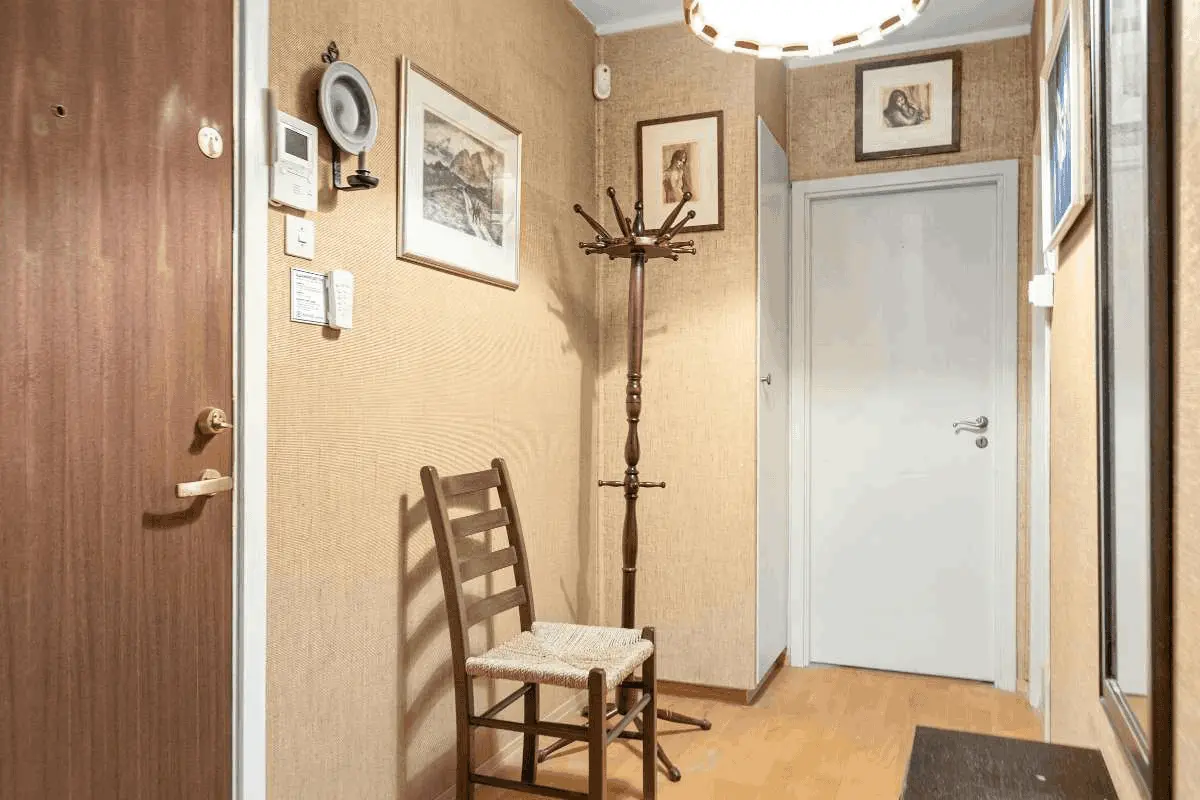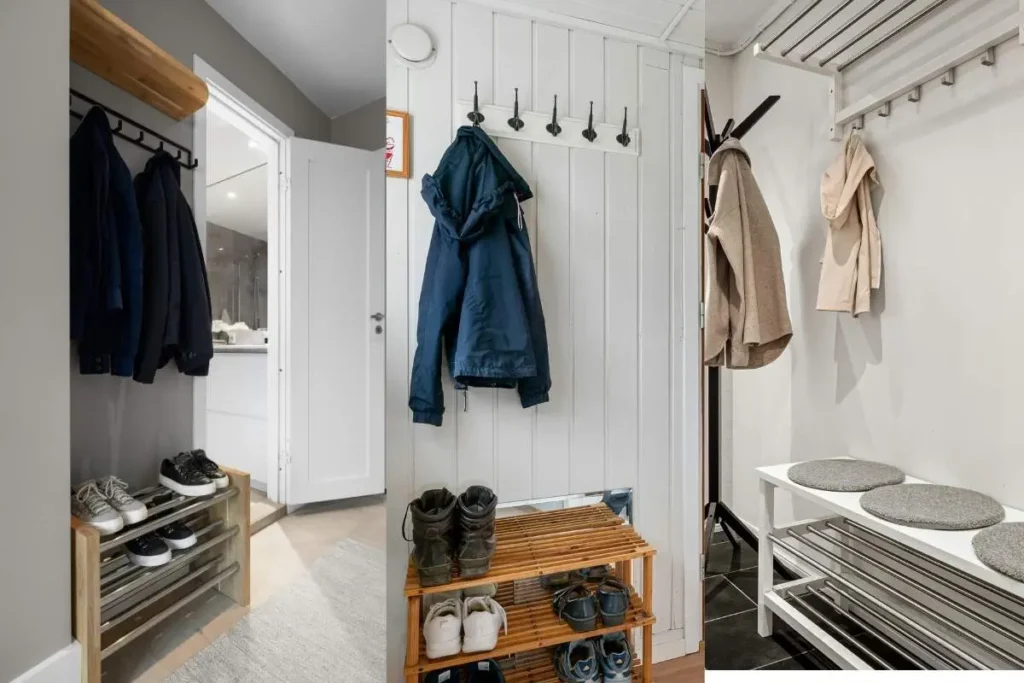
A small entryway can be fully managed without drilling using freestanding pieces and weight-calculated items: a slim shoe rack, an over-the-door hook rack for coats, a small catch-all tray for keys and mail at the door, and a tight console table or leaning shelf if there is space. None of these need a wall anchor, and all of them go with you.
In a small entryway, there are shoes, coats, keys, and mail; all of this happens within a few feet of the front door, for renters who cannot drill holes in their walls, finding practical small entryway storage ideas with no drilling is essential.
Key Takeaways:
- A catch-all tray for keys and mail is usually the single most impactful item on this list.
- Adhesives work, but only those rated for the actual weight and humidity of the room.
- Freestanding furniture solves most storage problems that people think require drilling.
- Giving each item type (shoes, coats, mail) a specific place organizes the space after the first week.
- A complete no-drill setup price is usually less than $150.
6 Small Entryway Storage Ideas With No Drilling That Protect Your Deposit
- A Slim Freestanding Shoe Rack.
- An Over-the-Door Hook Rack for Coats.
- A Small Catch-All Tray for Keys and Mail.
- A Narrow Console Table or Leaning Shelf.
- A Freestanding Coat Rack or Storage Bench.
- A Tension Rod for Hanging Bags or Scarves.
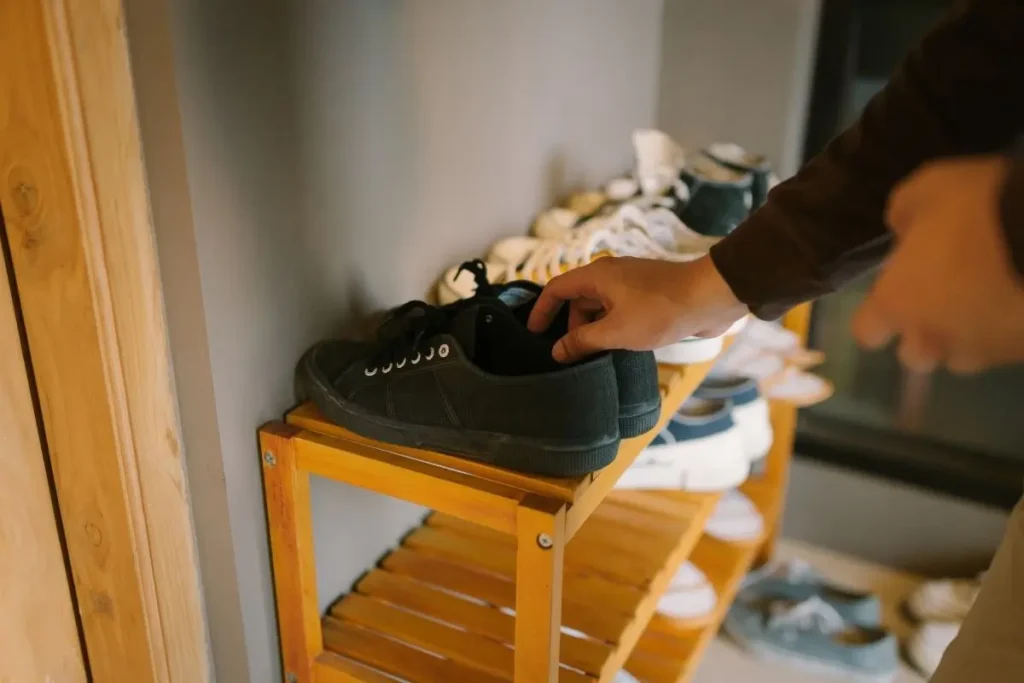
1. A Slim Freestanding Shoe Rack:
Why it works: A tight vertical rack uses less floor space than a pile of shoes, and it makes shoes look neat.
Advice on size: Measure the width of the entryway before buying. A rack that is too wide will block the walkway, which defeats the goal.
Cost: $20–$40
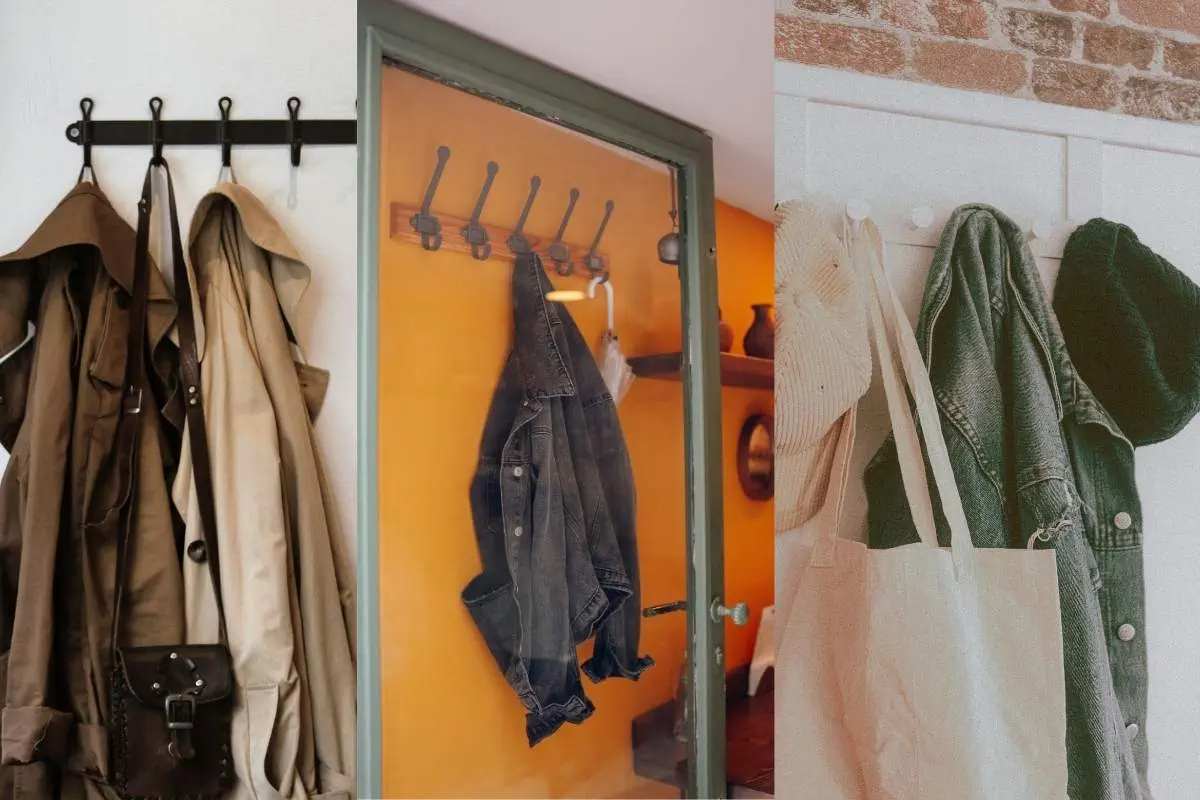
2. An Over-the-Door Hook Rack for Coats:
Why it works: This no-stress, no-drilling, no-adhesive, no-tool option is hung over the top of the door. It holds coats, bags, and anything else that ends up on a chair.
Styling Tip: Look for fabric or matte metal over plastic. This reads intentionally instead of looking like a dorm room fix.
Cost: $15–$25
3. A Small Catch-All Tray for Keys and Mail:
Why it works: Without a specific place, keys and mail land on the nearest flat surface by default, which is usually visible and cluttered in an entryway.
Placement Tip: Keep it where items naturally land, the exact inside-door drop zone.
Cost: $8–$15

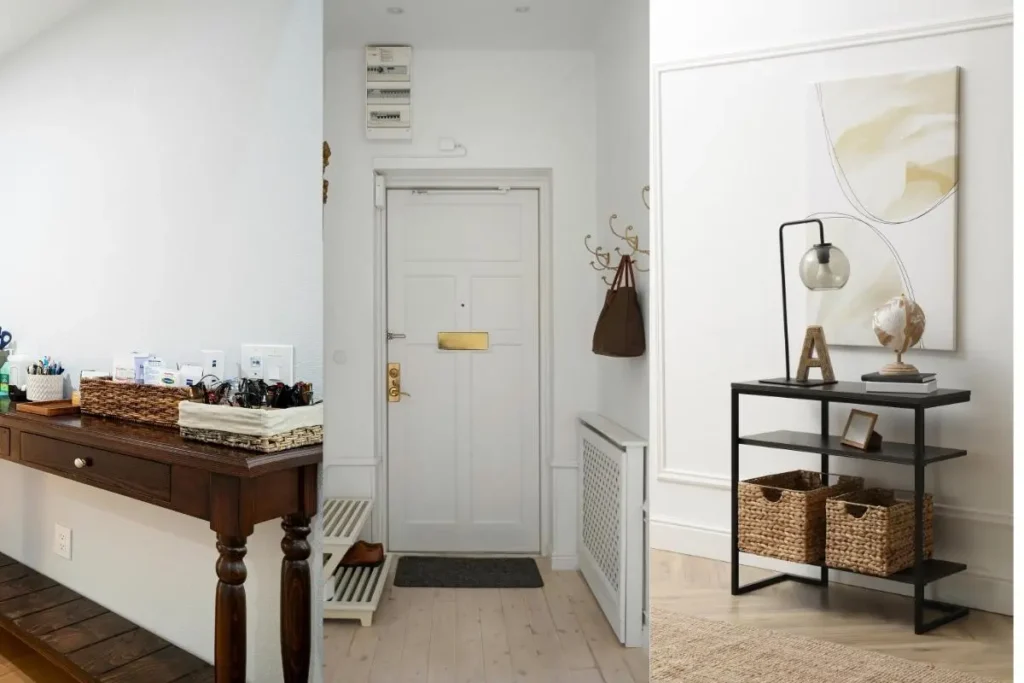
4. A Narrow Console Table or Leaning Shelf:
Why it works: It provides a surface for a tray, a small lamp, and a designated level for items. There is no lip edge, so things left behind are easily seen.
Small space indication: A 10- to 14-inch-deep table fits most strict entry routes without stopping the way. If that is too wide, a shelf leaning against the wall provides similar utility in a smaller footprint.
Cost: $40–$90
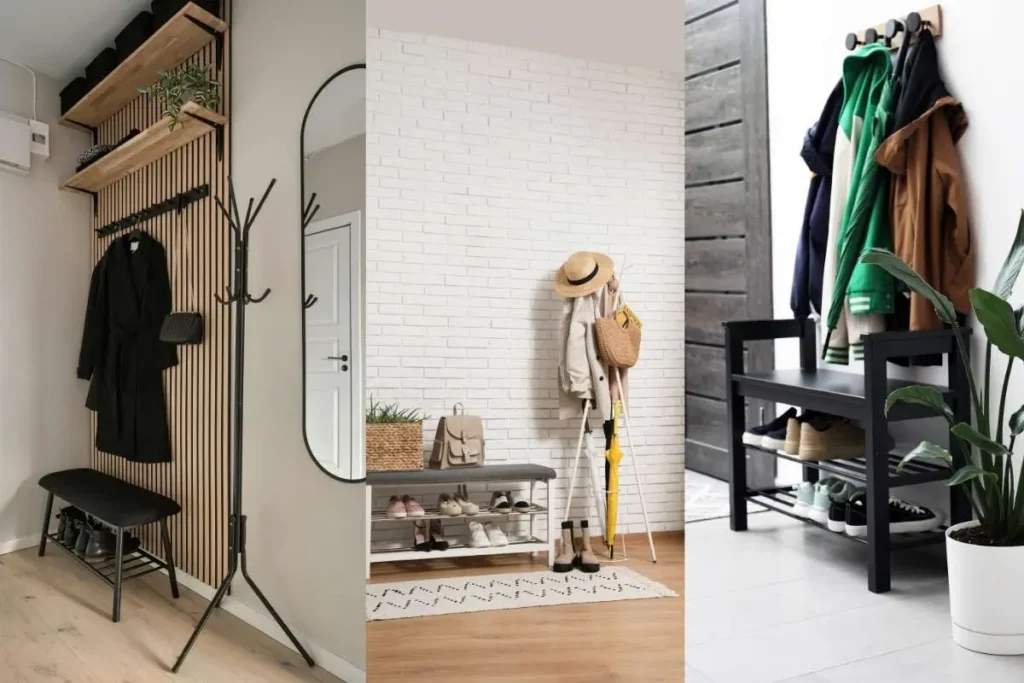
5. A Freestanding Coat Rack or Storage Bench:
Why it works: A coat rack that stands on its legs holds a lot more than a few adhesive hooks, and a bench with bottom storage solves seating and storage in one piece.
Size indicator: A coat rack requires approximately 18 to 24 inches of floor diameter to remain stable. A storage bench works best in entryways that are at least 3 feet wide so it does not block the door swing.
Cost: $35–$80
6. A Tension Rod for Hanging Bags or Scarves:
Why it works: The tension rod uses pressure between two walls—no drilling, no adhesive. It is one of the fastest ways to add hanging space in a narrow entryway.
Placement: Place it at a height where bags clear the floor; usually, chest height works best for most people.
Cost: $10–$18
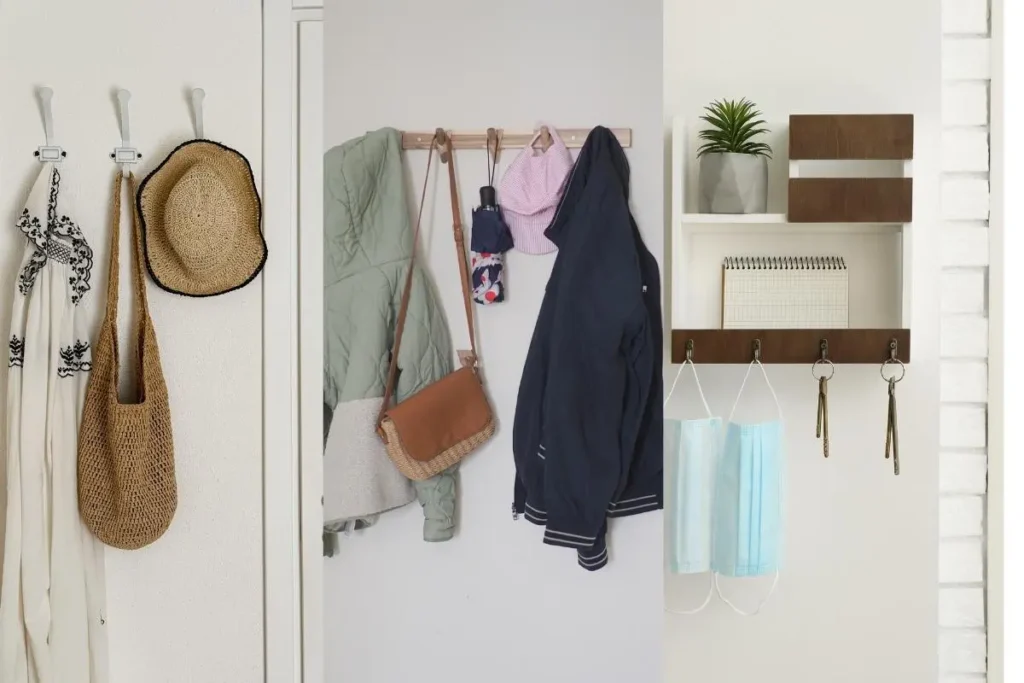
Do Adhesive Hooks Actually Hold Up Here?
Only those rated for the specific room and weight hold up. The Command water-resistant bath line holds 3 to 5 pounds per strip and is made for humid rooms. Standard indoor strips are not the same and fail quickly, especially close to front doors that let in outside humidity.
Pro Tip: Buy strips rated for double the item is actual weight. A coat that weighs 2 pounds should still go on a 5 lb-rated strip, not a 2 lb strip.
Protective Note: Wait a full 24 hours before hanging anything on the adhesive strip after applying it. Most failures occur because adhesives have not yet set completely.
Layout by Entryway Type:
- Tight Hallway (Less than 3 feet wide): Skip floor furniture completely. Use only a small tray or thin hook rack, and keep the floor clear.
- Studio Apartment with No Separate Entry: Place a console table inside the door, a small rug in front of it, and a wall-leaning mirror to define an entryway where none exists structurally.
- Shared Entryway: Give each person a designated hook and tray section. Mixing everyone has items in one pile usually causes clutter to return.
Common Mistakes in a Small Entryway:
- Skipping the tray: This is the cheapest item on the list, and the one most often skipped, even though it solves the most daily friction.
- Buying furniture before measuring: A rack or table that looks fine online can block the door in real life.
- Overloading a hook instead of adding more: The weight limit is per strip, not per wall.
- Piling everything on the floor: A pile on the floor is rarely organized later; it usually only grows.
Full Comparison: Every Item at a Glance:
| Item | Rental Friendly? | Budget |
|---|---|---|
| Slim shoe rack | Yes, freestanding | $20–$40 |
| Over-door hook rack | Yes, no wall contact | $15–$25 |
| Catch-all tray | Yes, no mounting | $8–$15 |
| Console table / shelf | Yes, freestanding | $40–$90 |
| Coat rack or bench | Yes, freestanding | $35–$80 |
| Tension rod | Yes, pressure-mounted | $10–$18 |
| Adhesive hooks (Bath line) | Yes, weight-rated | $10–$15 |
Does This Protect a Security Deposit?
Yes. Guidance on move-out charges by RentSpree notes that small nail holes are commonly considered normal wear and tear, but large holes from installed shelves or brackets can result in deposit deductions. Everything on this list completely avoids that because nothing here requires a wall anchor.
What to Do Next:
Start with the tray. It is the cheapest item here and fixes the most daily clutter. Next, add the shoe rack and coat hook rack, based on which pile, shoes or coats, is currently larger in your space.
An entryway that is more of a full hallway can use additional design ideas, which are included in our full Foyer Decorating Guide.
Frequently Asked Questions (FAQs):
What is the best way to manage small entryways without drilling?
Use freestanding pieces, a shoe rack, an over-the-door hook rack, a catch-all tray, and weight-calculated adhesive hooks. None of these require wall anchors.
What if my entryway is right behind the front door?
An over-the-door hook rack works well here because it utilizes the door itself rather than the surrounding wall or floor space.
How much weight can adhesive hooks hold in an entryway?
Command water-resistant bath line strips hold 3 to 5 pounds per strip. Standard indoor strips are not rated for the humidity near front doors and fail quickly.
How much does a complete no-drill entryway setup cost?
A complete setup- shoe rack, hook rack, tray, and small table- usually ranges from $83 to $170.
Will a small entryway setup affect my security deposit?
No, as long as it remains freestanding or uses weight-rated adhesives. According to guidance from RentSpree, large drilled holes cause security deposit deductions, not small damage-free setups.
Is a storage bench worth it in a small entryway?
Yes, provided the space is at least 3 feet wide. It combines seating and storage in one piece, saving floor space compared to a separate rack and chair.
Can a tension rod really hold bags in an entryway?
Yes, as long as it is rated for the distance between the walls and installed at chest height to clear the bag straps. It holds through pressure alone without drilling or adhesives.
What makes a small entryway look cluttered rather than organized?
Usually, it comes down to skipping a catch-all tray, mixing shoes and coats in one pile instead of separate zones, or buying furniture that is too large for the space.

Ayesha Khan is a home stylist and interior layout strategist and the founder of Webpluse. She specializes in transforming compact residential spaces through practical apartment decorating ideas, high-density storage solutions, and budget-friendly home improvement strategies—all tested in her own rental apartments. Her guides help a global audience across the United States, France, and Germany furnish and style small spaces without overspending.