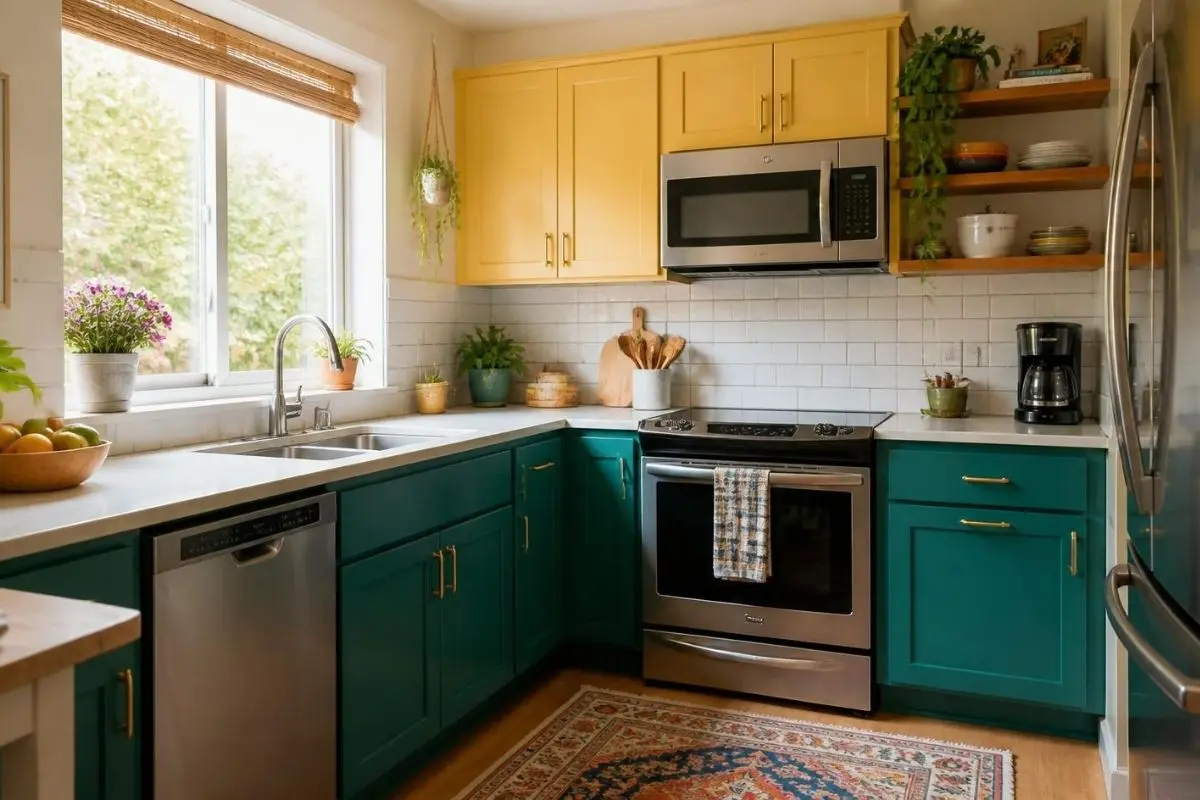
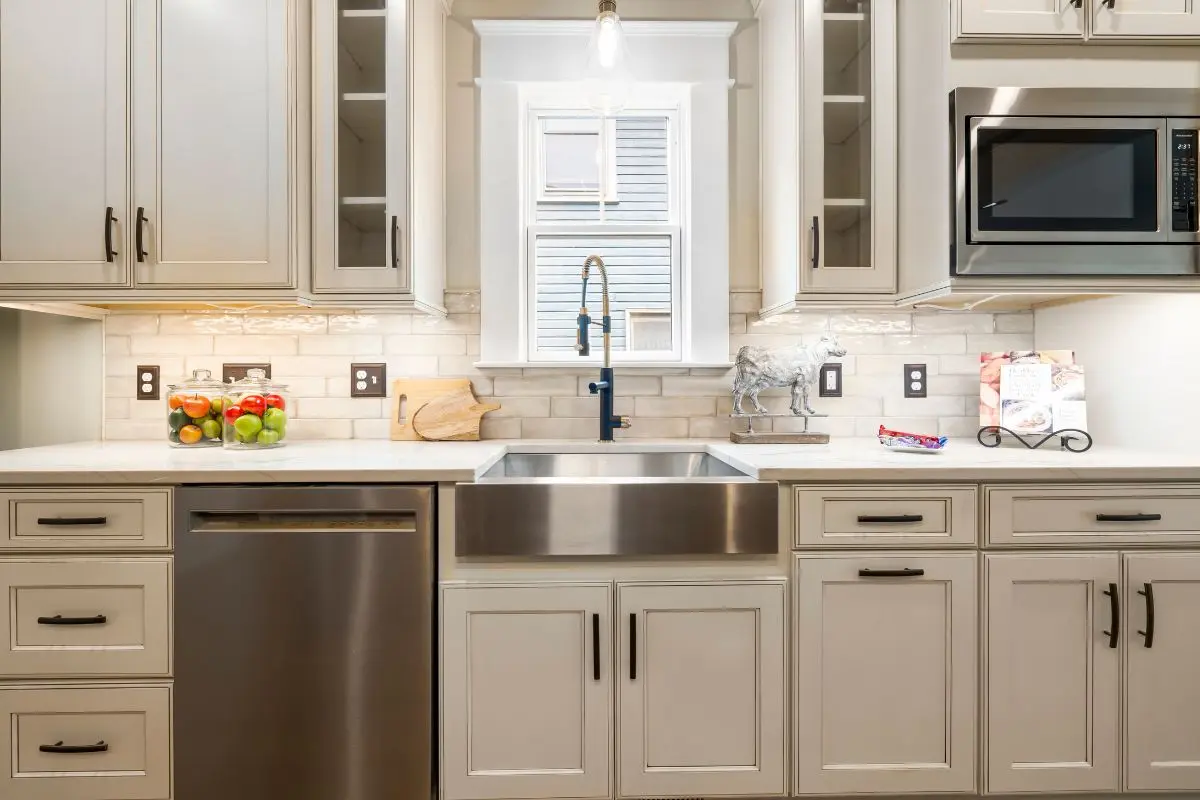
Maximizing kitchen storage in a small apartment requires utilizing vertical wall space and cabinet interiors. Adding magnetic spice racks, over-the-cabinet organizers, and tier-stackable shelf risers expands usable storage without consuming valuable countertop area.
Practical Storage Solutions for Small Apartment Kitchens
Very small kitchen storage ideas that work without cabinets or counter space depend on four things:
- Wall storage: magnetic strips, pegboards, floating racks
- No-cabinet storage: rolling carts, stackable bins, freestanding shelves
- Zero-drill hardware: Command hooks, tension rods, adhesive mounts
- Typical total cost: $60–150
I knew my kitchen had a problem the day I could not find a single clear inch to put down a cutting board. Mail, a fruit bowl, three half-empty spice jars, and a coffee maker had quietly taken over every surface, and I had not even started cooking yet.
Most small kitchen storage advice assumes you can drill into the walls, install permanent shelving, or call a contractor. If you are renting, none of that is on the table. Everything below works with walls, doors, and the dead space most people walk past every day. You need to all by yourself read must this guide for more renting decore of samll kitchen in budget.
Why Does Storage Disappear First in a Very Small Kitchen?
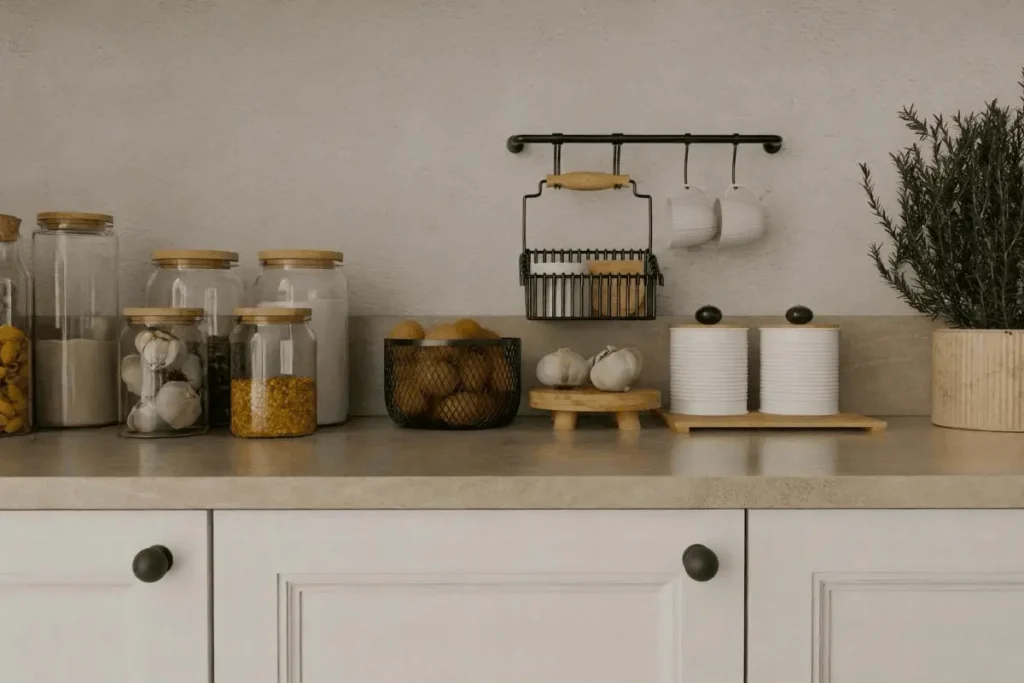
Storage disappears first because counters and cabinets are the only assigned space in the room; every item without a home ends up there by default.
- Mail, keys, and spice jars have nowhere else to go
- Small appliances and produce compete for the same few square feet
- Decluttering alone does not fix it, since new items show up every week
The real fix is giving every category of item appliances, spices, tools, mail a home that is not the counter or a packed cabinet.
8 Very Small Kitchen Storage Ideas That Use the Walls
Wall space is the most underused storage in a very small kitchen, and none of it requires permanent installation if you use the right hardware:
- Magnetic knife strip, adhesive-mounted, around $15–20.
- Pegboard panel adhesive strips or a leaning frame, holds pots and utensils.
- Under-shelf hooks clip onto an existing shelf for mugs or tools.
- A slim wall-mounted fruit basket instead of a counter bowl.
- Command-hook pot rail for pots or utensils with handles.
- Adhesive-mounted paper towel holder on the side of a cabinet.
- A floating spice rack using narrow adhesive ledges.
- A wall-mounted mail organizer near the kitchen entry.
None of these require a drill if you choose the adhesive-mount version; always check the weight rating before hanging anything holding glass or ceramic.
If you have a better design, then storage is not a problem.
Where Do Pots and Pans Go When There is No Cabinet Space?
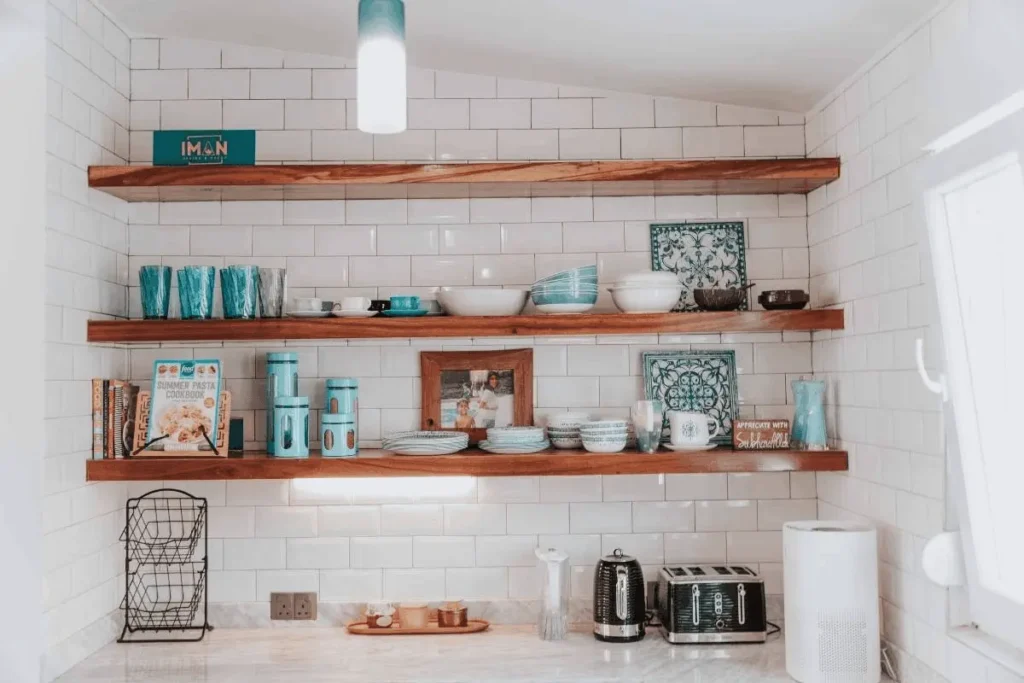
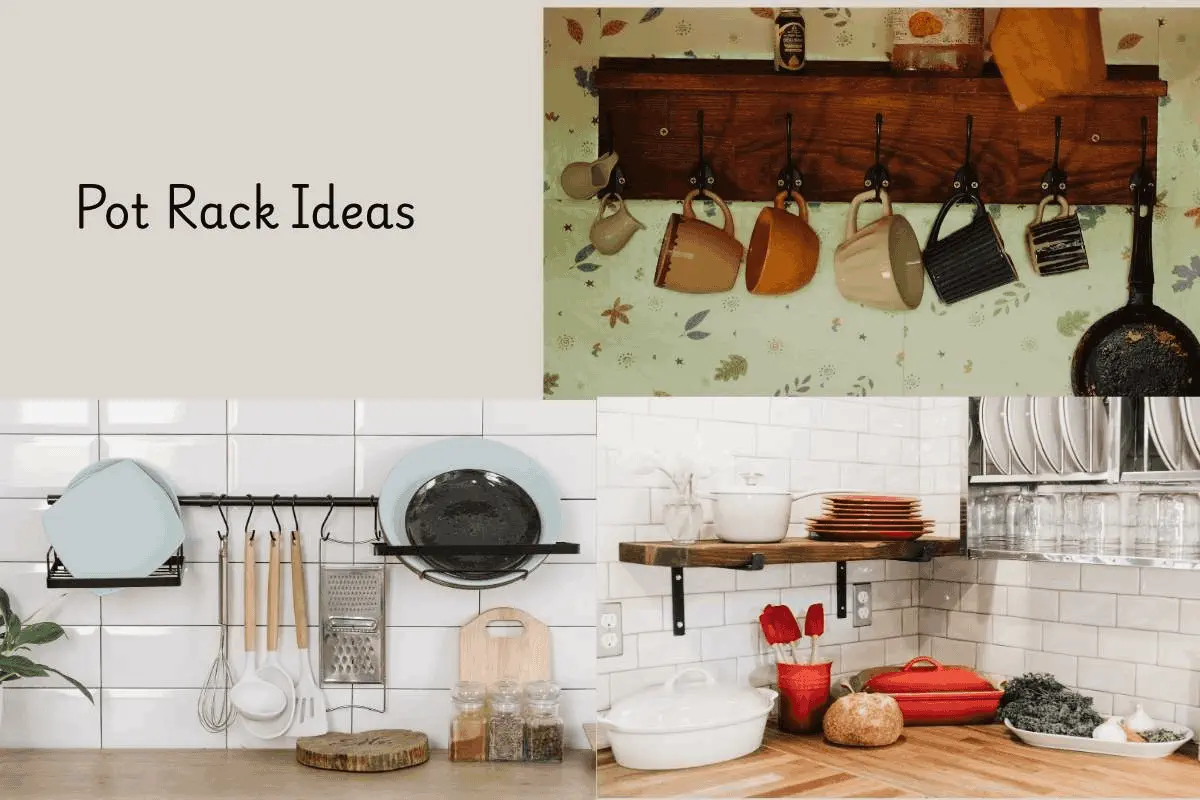
Pots and pans go on a wall-mounted rack or a ceiling-hung rail; this is usually the single biggest space-recovery move in a small kitchen.
- A basic wall rack with hooks costs $25–40 and holds 6–8 pieces of cookware
- A hanging pot rail works even better if your ceiling has clearance, since it uses space above your head
- Heavy cast iron needs a rack rated for real weight, not the lightweight decorative version. Check the listed weight capacity before you buy
6 No-Cabinet Storage Ideas That Do Not Touch a Wall
Not every fix needs wall space; these work entirely on the floor or on existing furniture:
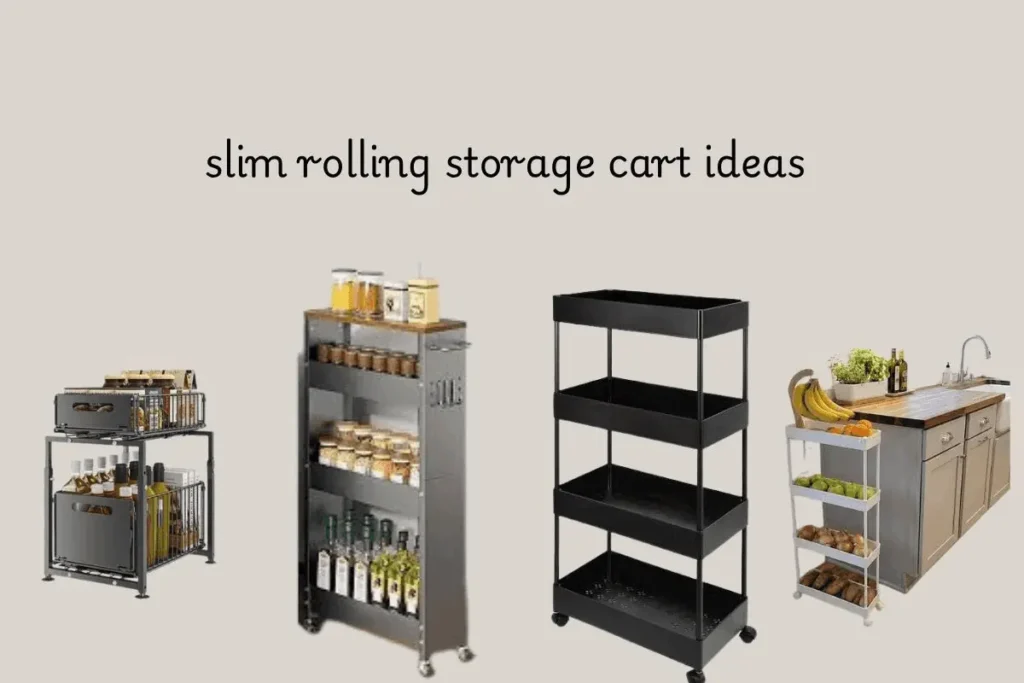
- A slim rolling cart between the fridge and the wall (most gaps run 10–14 inches; measure first)
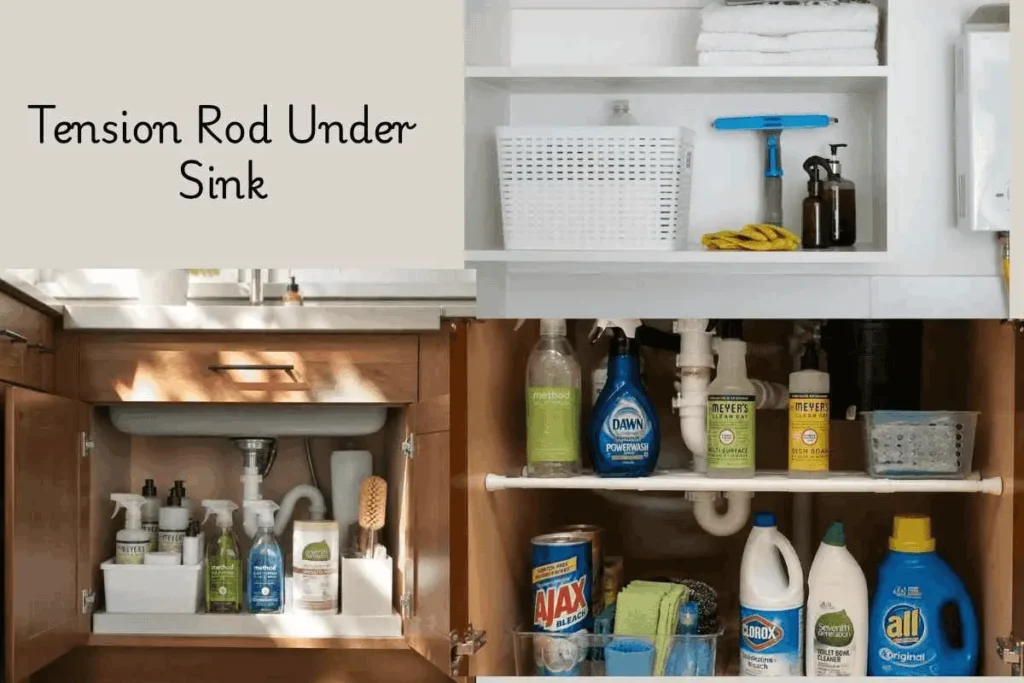
- A tension rod under the sink, creating a second shelf layer in under two minutes
- Stackable bins inside a single cabinet to double its usable layers
- A freestanding baker rack or bookshelf for dishware and pantry items
- Over-the-fridge storage for infrequently used items like a waffle iron
- An over-the-door organizer on the pantry or kitchen door
What is the Best Kitchen Storage for Renters Who Can not Drill?
The best drill-free kitchen storage options are tension rods, kitchen-rated Command hooks, and freestanding carts, all install and remove without leaving a mark.
- Command hooks (kitchen-rated) handle grease and moisture and hold towels and oven mitts
- A tension rod works as a shelf divider, an under-sink curtain rod, or a towel bar
- A rolling cart moves to wherever the days task needs it
These same rental-friendly tricks worked for my $322 apartment decorating project. Command strips and removable wallpaper held up just as well in the kitchen as anywhere else.
What Should You Actually Remove From the Counter First?
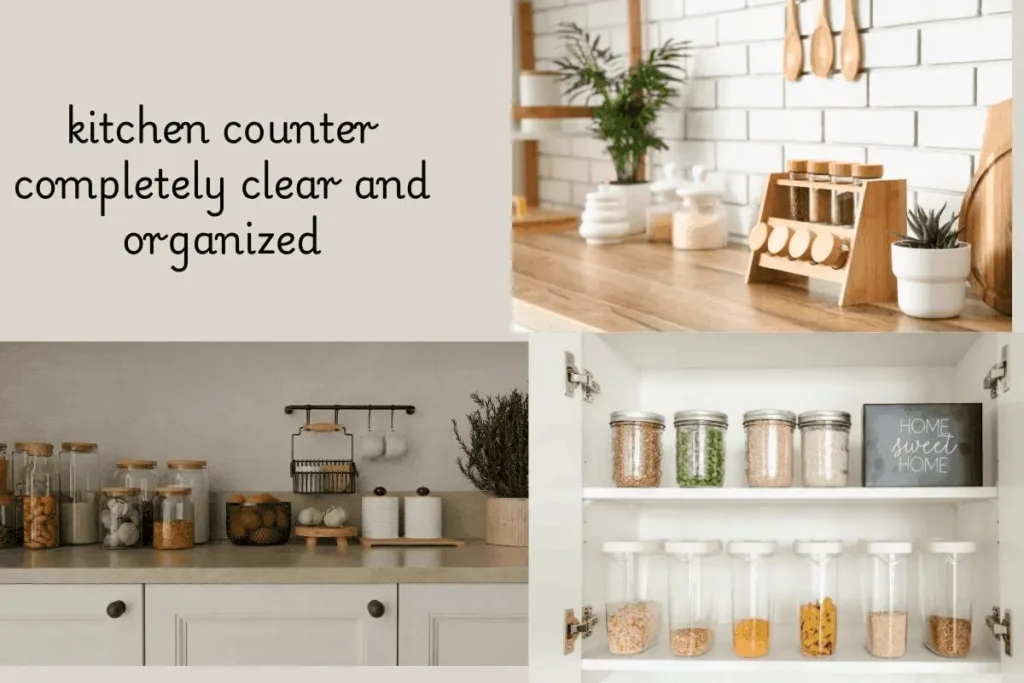
Remove small appliances you use fewer than twice a week first; they are the biggest counter-space offender and the easiest to relocate.
In order of impact:
- Small appliances used occasionally → into a cabinet or shelf
- Spice jars → onto a magnetic strip or door-mounted rack
- The fruit bowl → onto a wall-mounted basket
- Mail and paper clutter → a wall-mounted file rack near the entry, not the kitchen
- Cutting boards → hung on a hook instead of stacked
If you only do the first two, you will usually get back close to half your counter space.
How Much Does Very Small Kitchen Storage Cost?
A full overhaul typically costs $60–150 total if you stick to wall-mounted and adhesive solutions, meaningfully cheaper than most bedroom or living room storage projects.
| Storage Solution | Approx. Cost | Primary Storage Purpose | Rental Friendly |
|---|---|---|---|
| Magnetic Knife Strip | $15–$20 | Clears counter space by mounting knives vertically | Yes (Adhesive/Magnetic options) |
| Wall-Mounted Pot Rack | $25–$40 | Frees up deep cabinet space for cookware | Requires low-impact anchors |
| Kitchen Command Hooks (Set) | $10–$15 | Hangs measuring spoons, aprons, and utensils | Yes (100% Damage-free) |
| Under-Sink Tension Rod | $8–$12 | Hangs cleaning spray bottles to save cabinet floor | Yes (Pressure-mounted) |
| Pegboard Panel with Hooks | $20–$35 | Customizable vertical wall storage for tools and pans | Yes (Freestanding/Mountable) |
| Slim Rolling Cart | $40–$70 | Utilizes narrow dead gaps between appliances | Yes (Freestanding) |
The Kitchen Is Not Too Small. It is Just Unassigned.
Your counter was never meant to store spices, small appliances, and mail; it was meant to be a workspace. Once every other category of item has a real home on a wall, a door, or a rack, the counter goes back to doing its actual job. Start with the two easiest wins, appliances and spices, and you will feel the difference before you have spent a dollar on anything else.
Also read the Minimalist Small Kitchen on a Tight Budget best ideas guide.
FAQ: Kitchen Storage Ideas for Small Apartments
What's the fastest way to free up counter space in a very small kitchen?
Move small appliances you use less than twice a week into a cabinet, and switch spice jars to a magnetic wall strip — these two changes alone usually free up close to half the counter.
Can I add kitchen storage without drilling into rental walls?
Yes. Kitchen-rated Command hooks, tension rods, pegboard panels on adhesive strips, and freestanding carts all install without tools and come off cleanly at move-out.
Where do pots and pans go if I have no extra cabinet space?
A wall-mounted rack or ceiling rail holds most one- or two-person cookware collections and frees up an entire cabinet shelf.
Is a rolling cart worth it in a very small kitchen?
Only if you have a genuine gap of at least 14 inches. Measure first, since most small-kitchen gaps are narrower than they look, and a cart that doesn't fit is wasted money.
What's the cheapest very small kitchen storage idea?
An under-sink tension rod, at $8–12, usually delivers the most storage per dollar since it turns one flat shelf into two usable layers instantly.

Ayesha Khan is a home stylist and interior layout strategist and the founder of Webpluse. She specializes in transforming compact residential spaces through practical apartment decorating ideas, high-density storage solutions, and budget-friendly home improvement strategies—all tested in her own rental apartments. Her guides help a global audience across the United States, France, and Germany furnish and style small spaces without overspending.